WE ARE FOOTBALL 2027 Second Team Guide: U23 Squad, Rules, Promotion
How the WE ARE FOOTBALL 2027 second team works: the U23 squad screen, training points, team goals, status stars, renaming, and the league rules for reserve sides.
Frequently Asked Questions
What is the second team for in WE ARE FOOTBALL 2027?
Can second teams play in the leagues in WE ARE FOOTBALL 2027?
Is there an age limit for second-team players?
How do you rename the second team in WE ARE FOOTBALL 2027?
Every youth system needs a floor between the U19 ranks and the first team, and in WE ARE FOOTBALL 2027 that floor is the second team — the 2. Mannschaft. It is the least glamorous screen in the game, and on a save like the tutorial’s, whose club sits in the 5. Liga Südwest with an empty reserve squad, it looks almost bare. Look closer, because it is the piece that decides whether your academy products actually play senior football at 18 or linger in the youth setup until they walk. This page walks the screen the way a ten-minute tutorial by NickFrei zockt walks it: what the second team is for, how its training points and goals work, what the status stars promise, and the country rules that decide whether a reserve side plays league football at all. If your question is upstream — finding and signing the talents first — the youth scouting guide covers the hunt.
What does the second team do in WE ARE FOOTBALL 2027?
The header names it plainly: 2. Mannschaft — Kader. Six tabs run across the top — Kader, Spielzeit, Verliehene Spieler, Spielerbeziehungen, Team-Hierarchie and Persönliches — and the tutorial’s verdict on them is quick: these work exactly as they do for the normal squad. What is different is the area at the bottom, because that is where the second team’s actual job lives. The squad is meant for youth players who are meant to develop further and are no longer at home in the youth ranks — in the author’s wording, players up to 23 years old.
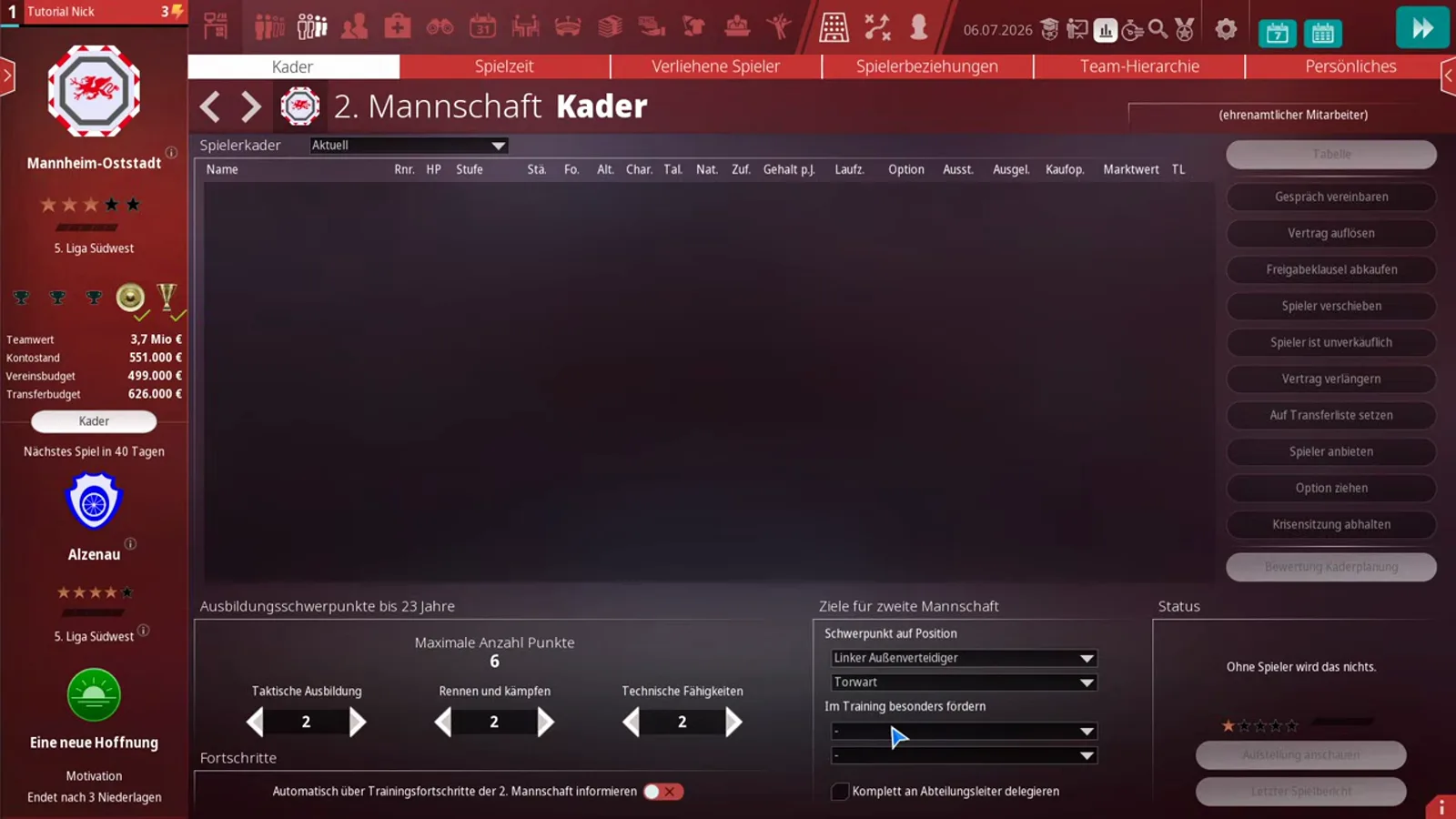
The empty save underlines the point by contradiction: the player list has no rows, the right-hand action rail — Gespräch vereinbaren, Vertrag auflösen, Auf Transferliste setzen and their neighbours — has nobody to act on, and the buttons underneath the Status panel stay greyed out. The filter bar above the list offers the same views as the first team’s, form and the next transfer period included. The mechanics are the first team’s mechanics; only the population is missing.
How do you rename the second team to U23?
The club screen holds the answer. Open the Vereinsdaten dialog and the right half belongs to the 2. Mannschaft, with its own Name, Kurzname and Abkürzung fields beneath the main club’s. The author renames his reserve side to a U23 — so that, as he puts it, the tables then show Mannheim-Oststadt U23 and he immediately recognises his youth team. Nothing changes mechanically, he notes; it is a label, not a restructure.
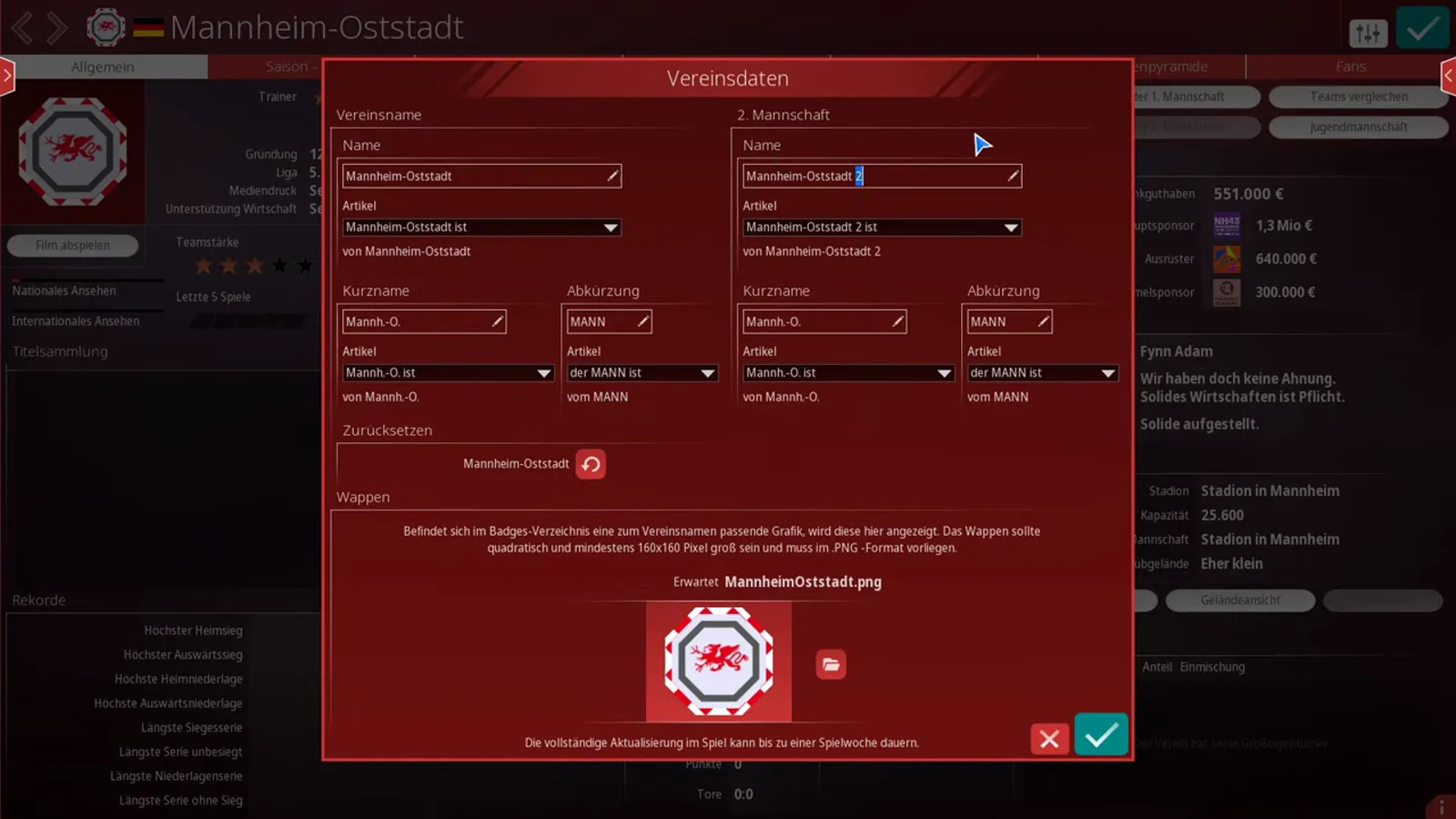
One line of small print deserves respect: Die vollständige Aktualisierung im Spiel kann bis zu einer Spielwoche dauern — the full update in game can take up to one match week. Rename in pre-season, not mid-run-in.
How do the Ausbildungsschwerpunkte bis 23 Jahre work?
The bottom-left panel is the reason the second team exists at all. Ausbildungsschwerpunkte bis 23 Jahre — training focuses up to 23 years of age — hands the second-team coach six points (Maximale Anzahl Punkte: 6) to spread across three steppers: Taktische Ausbildung, Rennen und kämpfen and Technische Fähigkeiten. The tutorial’s save runs a flat 2-2-2. Up to the age of 23, the author explains, this coach can push exactly those levers — tactical training, running and fighting, technical abilities — and they are youth training values, the same trio that steers the U19 screen; where their effects become visible in detail is a story he saves for the youth episode.
His squad-building rule belongs in the same breath: fill the list with under-23s and mix in a few older players nearing the end of their careers who no longer fit the first team — they are the ones who bring the experience to the young players, in his words. How the wider weekly training machine works around these focuses is the training plan guide’s territory.
What do the Ziele für zweite Mannschaft control?
The middle panel, Ziele für zweite Mannschaft, tells the coach where to aim. Schwerpunkt auf Position takes two position slots — in the tutorial the author sets Linker Außenverteidiger and Torwart, so the coach should take care of the left-back and the goalkeeper — and Im Training besonders fördern adds individual players who receive special support. Below sits a checkbox with a real decision in it: Komplett an Abteilungsleiter delegieren hands the whole second team to the department head as an assistant job. The author’s verdict is short — you can, but he wouldn’t. A development squad is precisely where you want to keep your hands on the levers. A small toggle to the left, Automatisch über Trainingsfortschritte der 2. Mannschaft informieren, lets the game report training progress on its own.
What does the Status area promise — and when can a reserve side climb?
The right panel, Status, is brutally honest on an empty save: Ohne Spieler wird das nichts — without players, nothing happens — above a star meter showing a single filled star of five. The author reads it as team strength: no big names, so the whole team carries the quality of one star. Bring players in and the stars rise; at some point, he says, the label flips to ambitions like playing for promotion or being a strong promotion candidate. His own save cannot get there — in his explanation, the first team would have to sit higher than the lowest league before the reserve side could push into the fifth division. Exact promotion mechanics are not demonstrated in the video, so treat the direction, not the detail, as the tutorial’s claim.
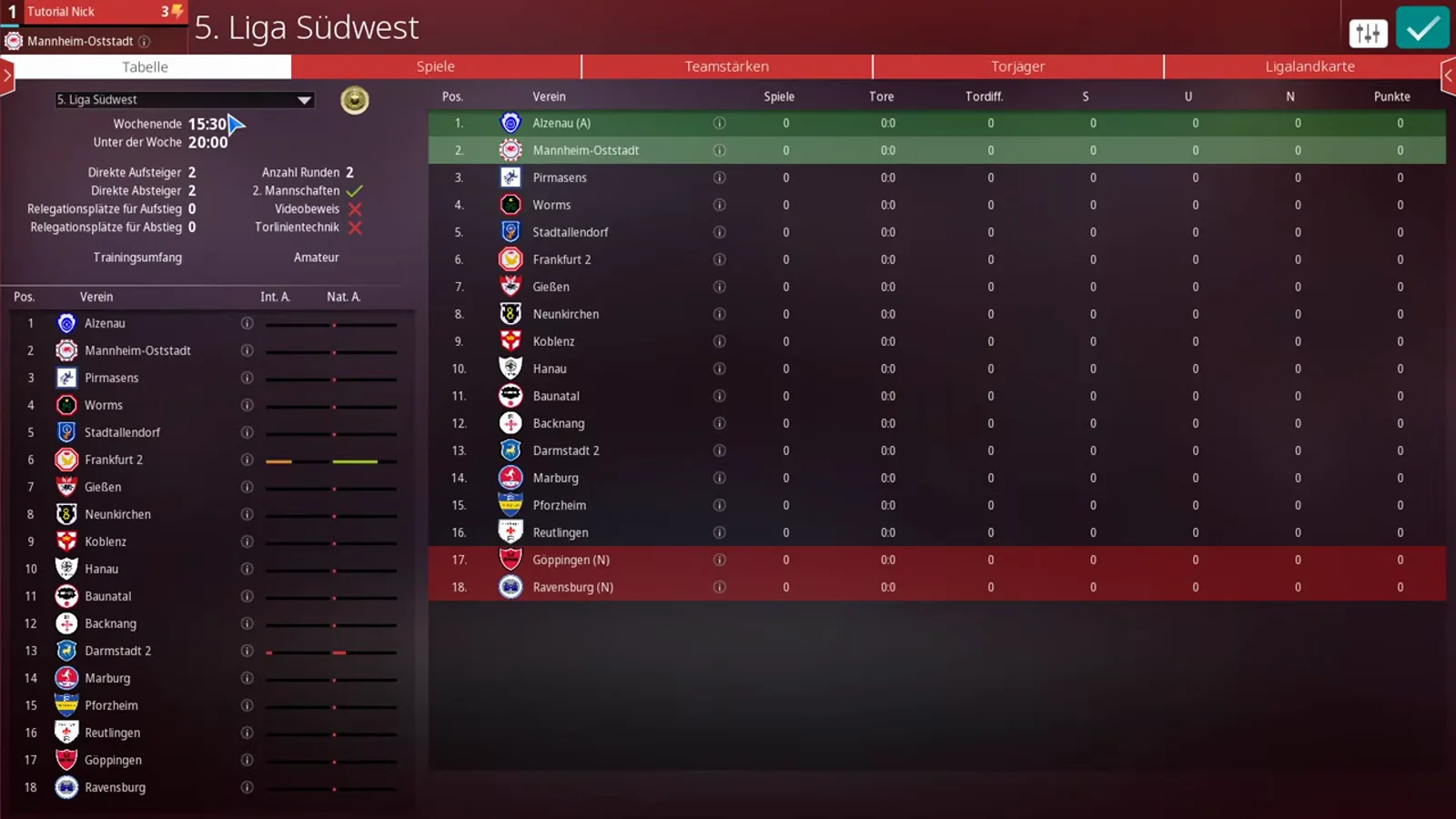
What a climbed second team looks like is visible one table over: the 5. Liga Südwest lists Frankfurt 2 in sixth and Darmstadt 2 in thirteenth, and the league settings on the left tick 2. Mannschaften with a green check.
Where are second teams allowed to play?
Whether your U23 plays league football is decided per country, and the league screens state the rule outright. Germany says yes: reserve teams belong in the pyramid, the 5. Liga Südwest’s settings panel proves it with its green check, and age rules are equally loose — I can fit a 33-year-old in here, the author demonstrates, it doesn’t matter at all. No hard age cap exists on the German second team; the 23 in Ausbildungsschwerpunkte bis 23 Jahre bounds only the training boost, not the squad list.
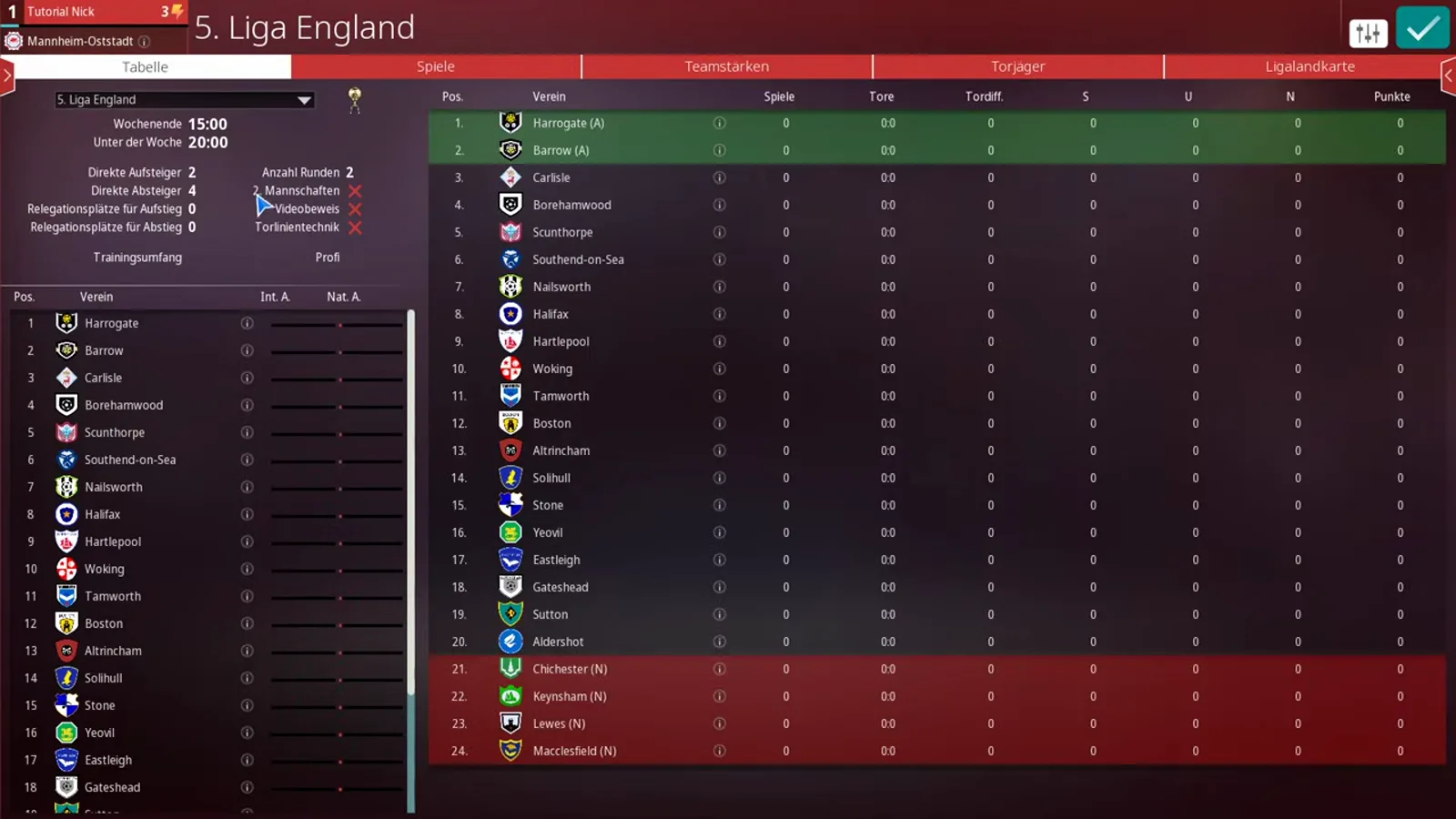
England says no. The 5. Liga England carries 24 clubs — Harrogate to Macclesfield in the shot — and its settings panel crosses out 2. Mannschaften with a red X. The author’s lament is every English lower-league save in one sentence: how am I supposed to do youth development here if I can’t bring them up into the second team?
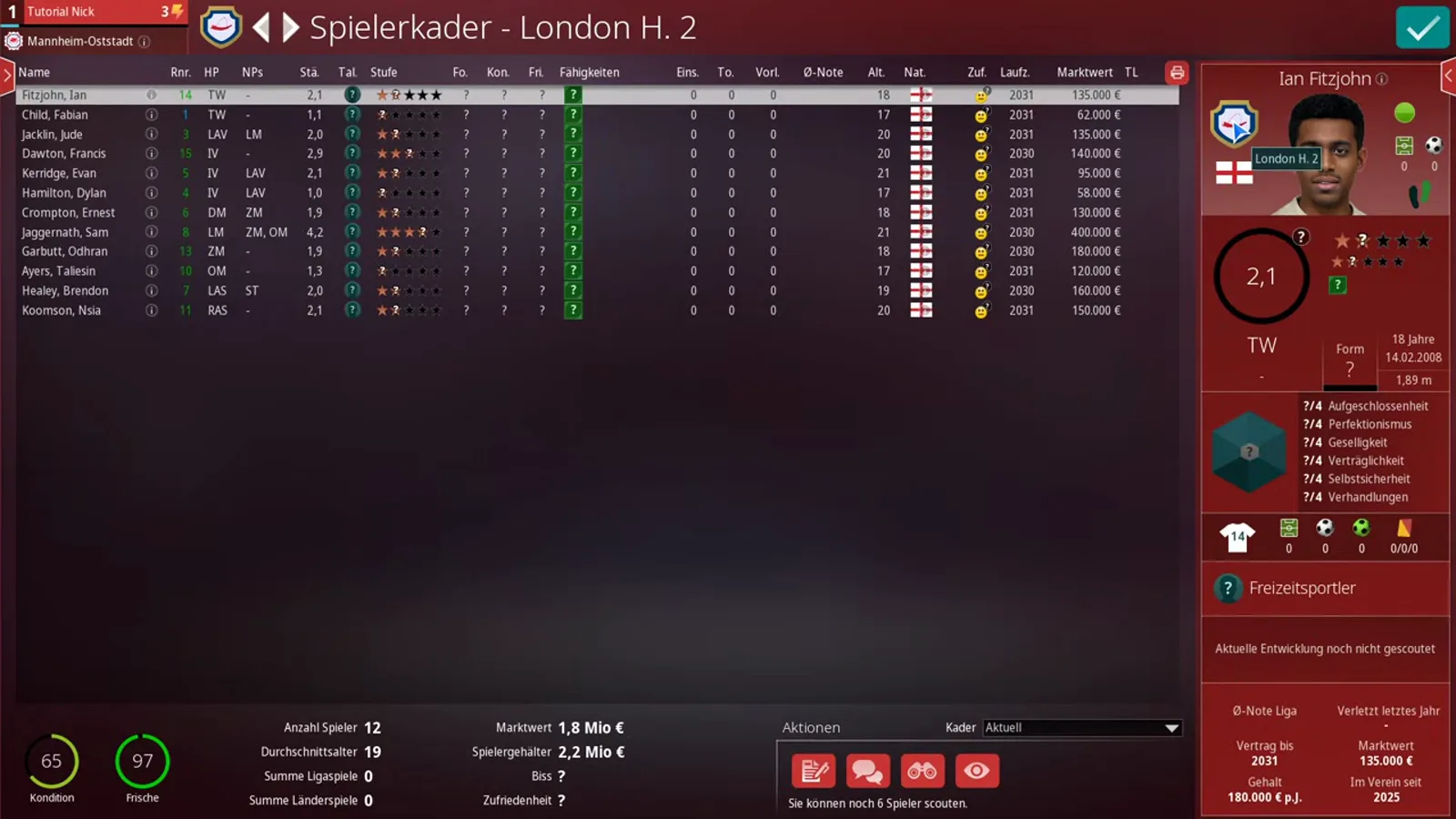
The English workaround exists one level up. Browsing to a first-division London club, the tutorial finds its reserve side — London H. 2, an abbreviation whose meaning even the author cannot place — and it does play, but in its own U21 League 1. The squad list shows twelve professionals with an average age of 19 and a market value of 1.8 million euros, goalkeeper Ian Fitzjohn’s card open at 18 years old. That is the English model: reserves never enter the senior pyramid, they get a separate U21 competition — and the clubs accordingly run U17, U19 and U21 teams instead of a German-style second team.
The handoff from the youth ranks
Where do the second team’s future residents come from? The video ends by pointing at the answer: the Jugend U19 screen of the same save. Its Beste Spieler list marks certain names in blue, and the note spells the rule out: Blau hervorgehobene Spieler sind im letzten Jugendjahr und scheiden aus, wenn sie keinen Vertrag erhalten — blue-marked players are in their final youth year and leave unless they get a contract. Those final-year names are precisely the population a second team is built for: sign them, and they move from the youth ranks into your U23 instead of out of the club.
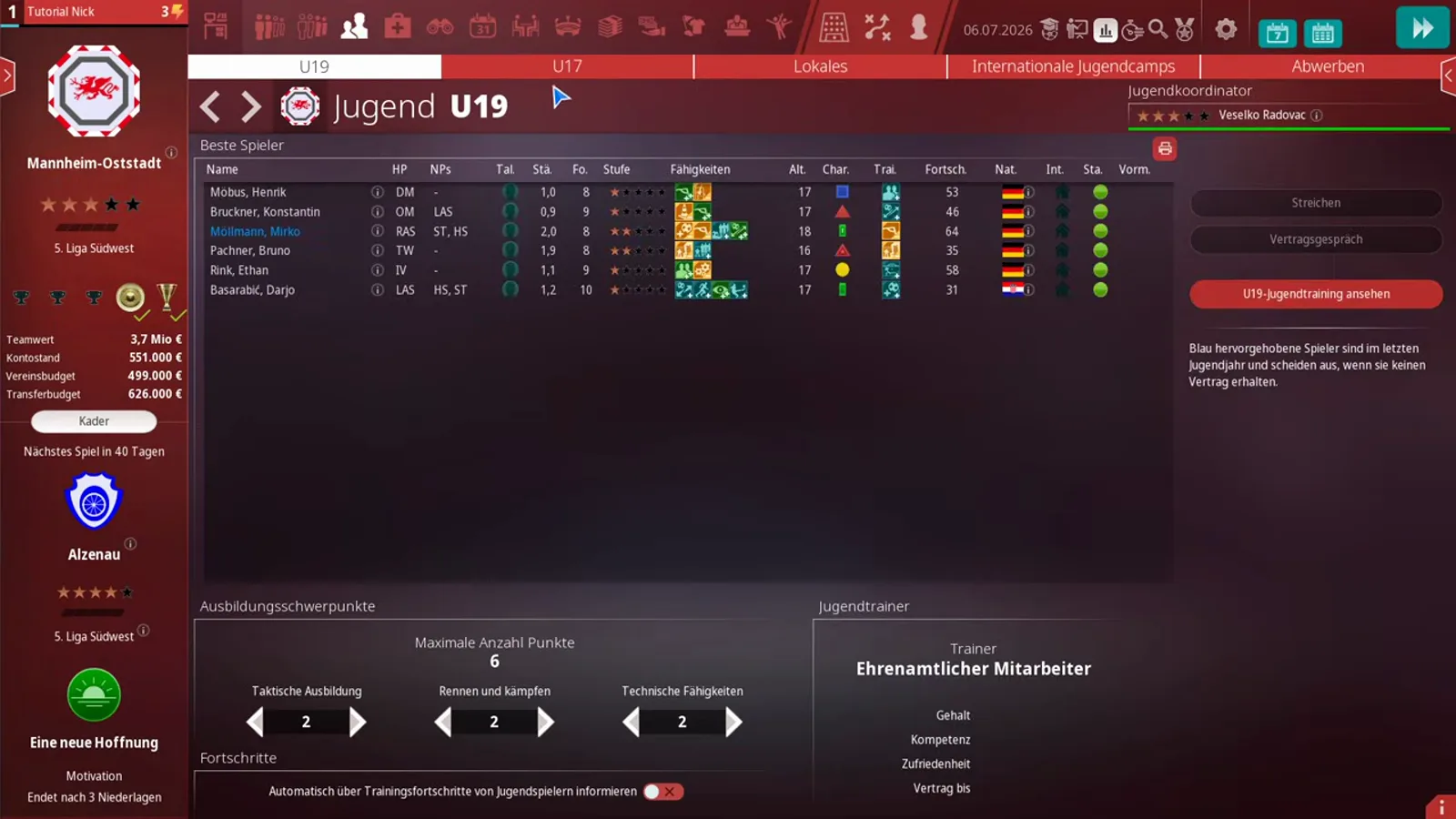
The seam is invisible by design: the panel underneath repeats the same three training categories — Taktische Ausbildung, Rennen und kämpfen, Technische Fähigkeiten, again six points — so the development logic carries straight over from U19 into the second team. The upstream pipeline of boarding school, scouting days and poaching is the youth scouting guide’s territory, international youth camps are a separate intake channel, and once your prospects have arrived, the player types and roles guide helps you shape what they become. If all of this starts from zero, the beginner guide rebuilds the basics first.
Related Guides
guides
WE ARE FOOTBALL 2027 Action Points Guide: How to Earn and Spend Them
Action points in WE ARE FOOTBALL 2027: the manual's earn table, the 50-point cap, every documented way to spend them — and why you cannot buy them.
guides
WE ARE FOOTBALL 2027 Options Guide: Every In-Game Setting Explained
Every in-game option in WE ARE FOOTBALL 2027: change difficulty mid-save, split budgets, autosave weekly, slow the week down, Hotseat timers, search caps, sackings.
guides
WE ARE FOOTBALL 2027 National Teams: Start, Season and Women's Football
National teams in WE ARE FOOTBALL 2027: no DLC needed. How to start or become a national coach, how qualifiers work, and what women's football offers.
Was this helpful?
Thanks for the feedback!