WE ARE FOOTBALL 2027: Stadium Expansion & Infrastructure Guide
Stadium expansion in WE ARE FOOTBALL 2027 explained: pitch hardness, capacity blocks, lodges, rotating ad boards, lawn heating and arrival upgrades that lift income.
Frequently Asked Questions
When should I expand the stadium in WE ARE FOOTBALL 2027?
Which stadium upgrades pay off fastest?
How does pitch hardness work in WE ARE FOOTBALL 2027?
Stadium work in WE ARE FOOTBALL 2027 lives in the Infrastructure hub. Its six tabs — Stadion, Details, Clubgelände, Anreise zum Stadion, Klimaneutralität and Hall of Fame (up to 16 club legends with name, birthday and picture) — cover everything from seats to shuttles. This walkthrough follows the tutorial screen by screen.
Reading the Stadium Dashboard
The Stadion tab opens with a photo of your ground and the key numbers beside it. In the tutorial save (Mannheim) the panel reads: capacity 25,600, sold-out revenue €188,800, average attendance and season tickets, 16,000 seats plus 9,600 standing places, zero lodges, and a separate capacity line for the reserve team. The naming-rights field stays empty until a sponsor buys it.
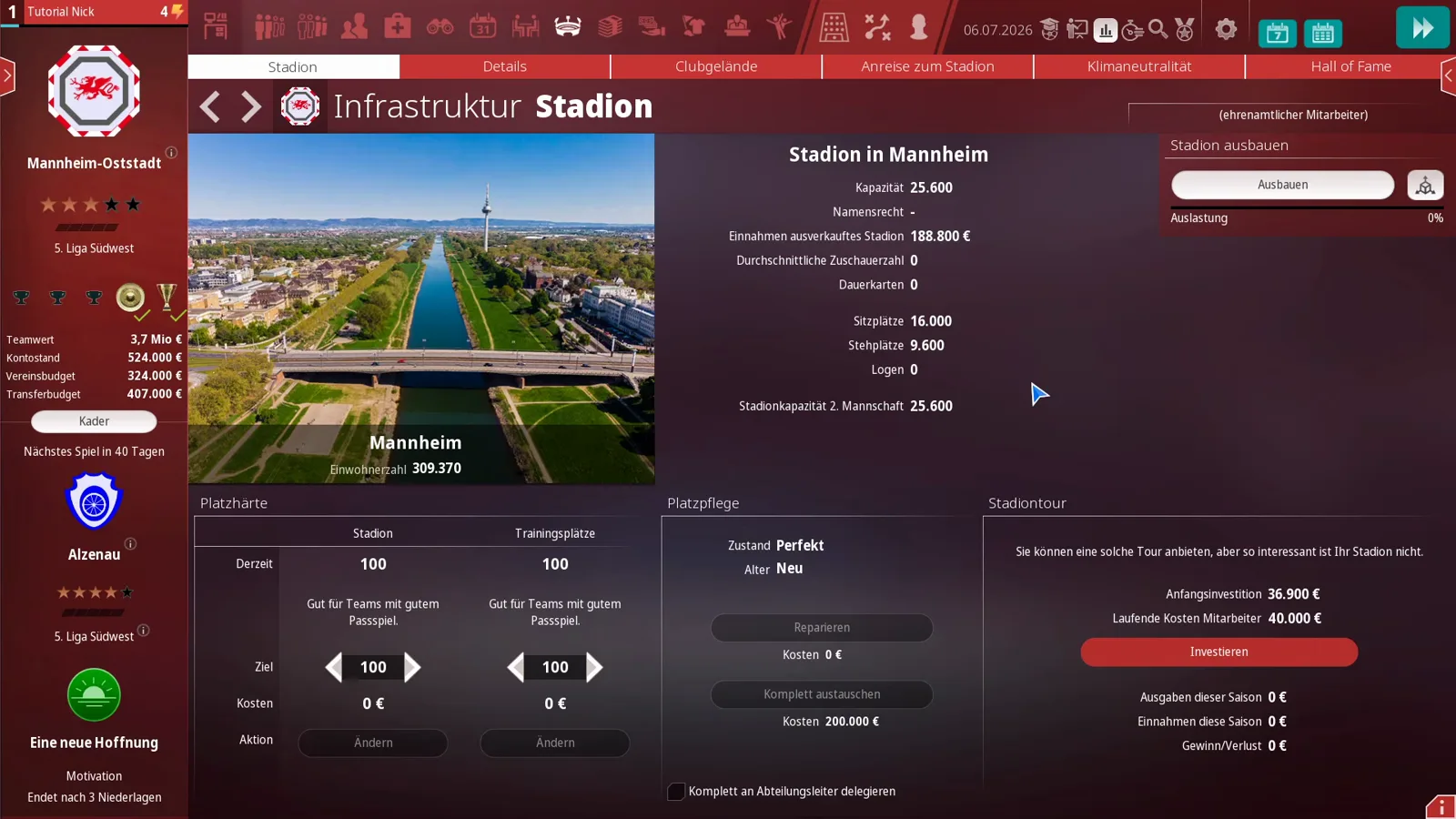
Top right sit the two controls that matter: Ausbauen (expand) and the Auslastung occupancy bar.
Expansion Timing and Player Mood
At 100% week after week, expand — you are turning fans away. Around 90%, expand when promotion is realistic so the bigger bowl is ready for the higher division. Around 50%, fix results first; a half-empty stadium only drains money.
Occupancy also feeds player mood. A 50,000-seat stadium that draws 5,000 spectators annoys your squad, while full stands lift it. So the tutorial recommends building a smaller stadium for the reserve and youth teams on the club grounds — and unlike in WE ARE FOOTBALL 24 the change now actually takes effect. Tie expansion spending to the wage-to-revenue discipline from our /guides/beginner-guide/, and see our /guides/finances-wage-budget-guide/ for where the matchday money lands — sponsors, TV income, and taxes.
Matching Pitch Hardness to Your Playing Style
Check the Platzhärte panel before buying a single seat: two columns, Stadion and Trainingsplätze, each with current value, target value and price. Around 100 the caption reads “Gut für Teams mit gutem Passspiel” — a surface built for passing sides; push the target down and it flips to “Perfekt für Rumpelfußballer”, kick-and-rush territory.
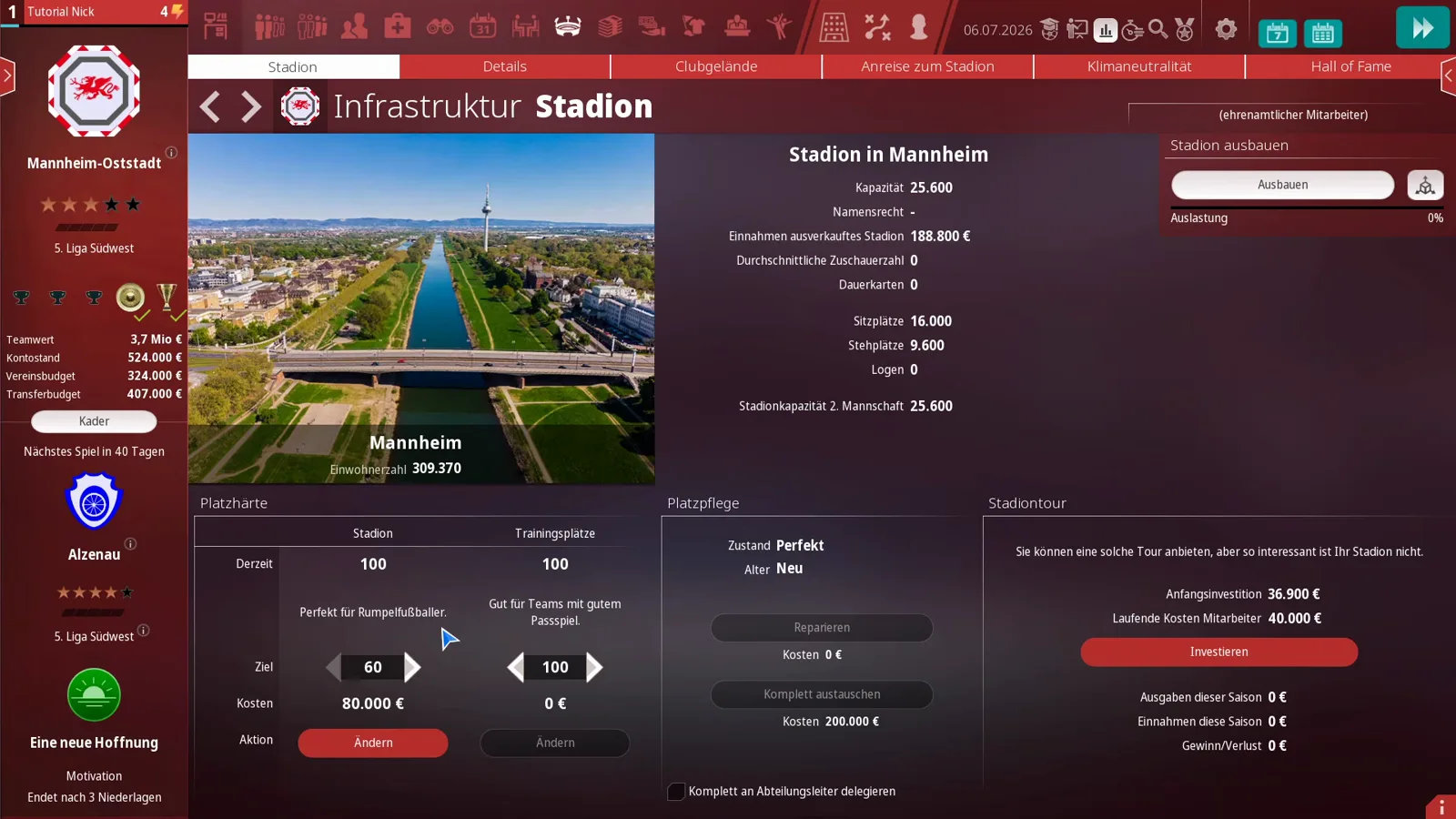
Only drop the target toward sixty for sides that genuinely play long balls, and keep the training ground aligned with the stadium — half your games are at home, and training on a different surface wastes the effect. Match the setup to the shapes in /tactics/best-tactics-formations/.
Building Capacity in the Block Planner
Pressing Ausbauen opens the block planner: one thumbnail per stand section, running clockwise from the main stand across corners, curves and the opposite goal. Select a section and stack blocks from the palette on the right — roof, lodge with video ring, plain lodge, advertising boards, seats, standing terraces. Blocks snap into place automatically, and the bottom bar recalculates New capacity and New sold-out revenue live while the side panel tracks budget and cost.
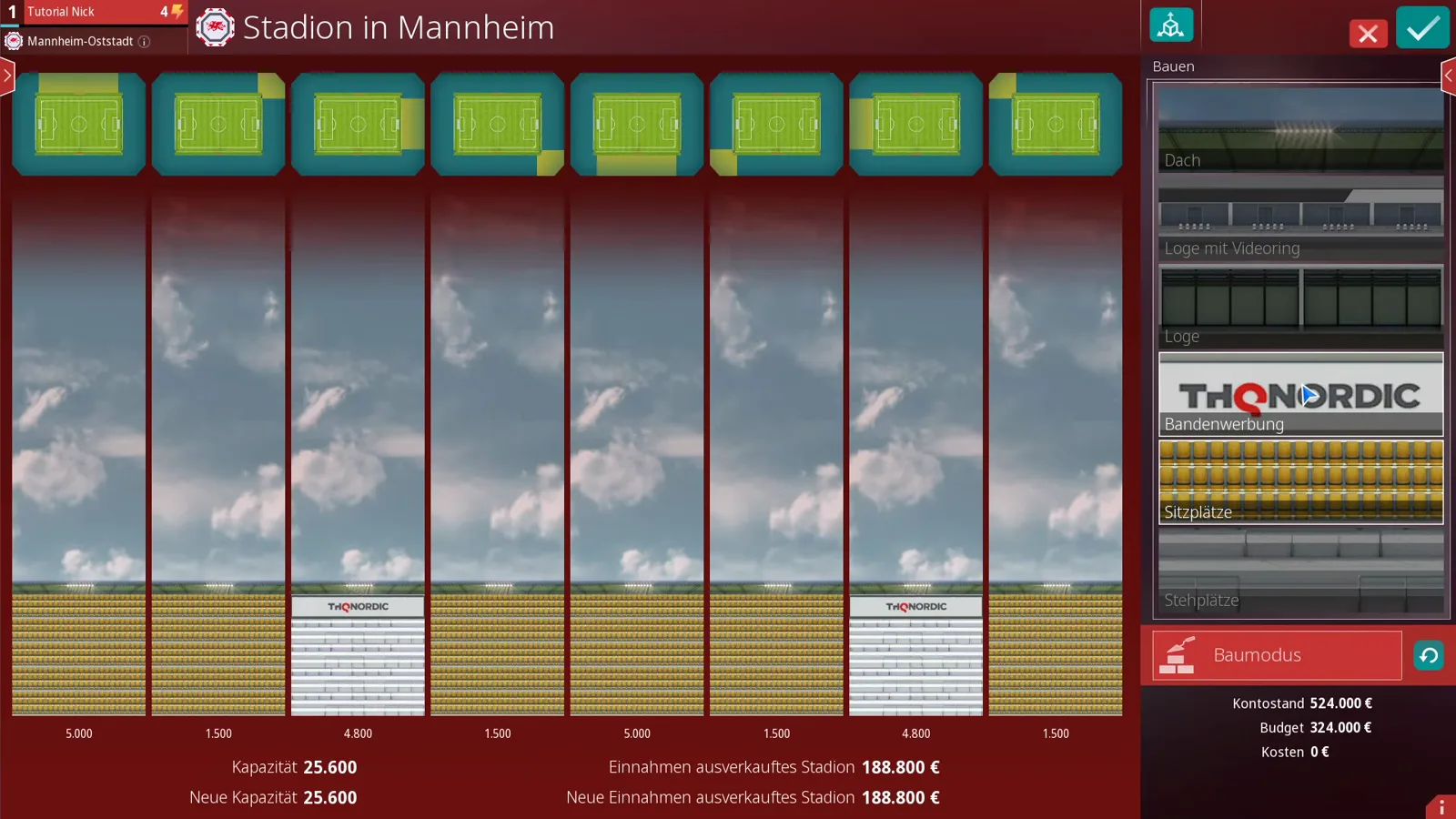
An advertising ring around the bowl plus seated corners is the classic first expansion.
Lodges, Advertising and Sponsor Timing
Two money features repay perfect timing. Rotating perimeter boards cost roughly €300,000 and, as the Details tab confirms, bring 5% more revenue. Cam Carpets cost about €20,000 and place flat sponsor images behind the goals that look like standing banners from the main camera — the screen notes they raise the offers of your most important sponsors.
Install both before you negotiate main or sleeve sponsors: bigger deals only materialise if the enhanced inventory already exists. Extra commercial income then funds the next wave of signings — see /guides/transfer-market-guide/ — or softens the wage bill discussed in /guides/contract-negotiations/.
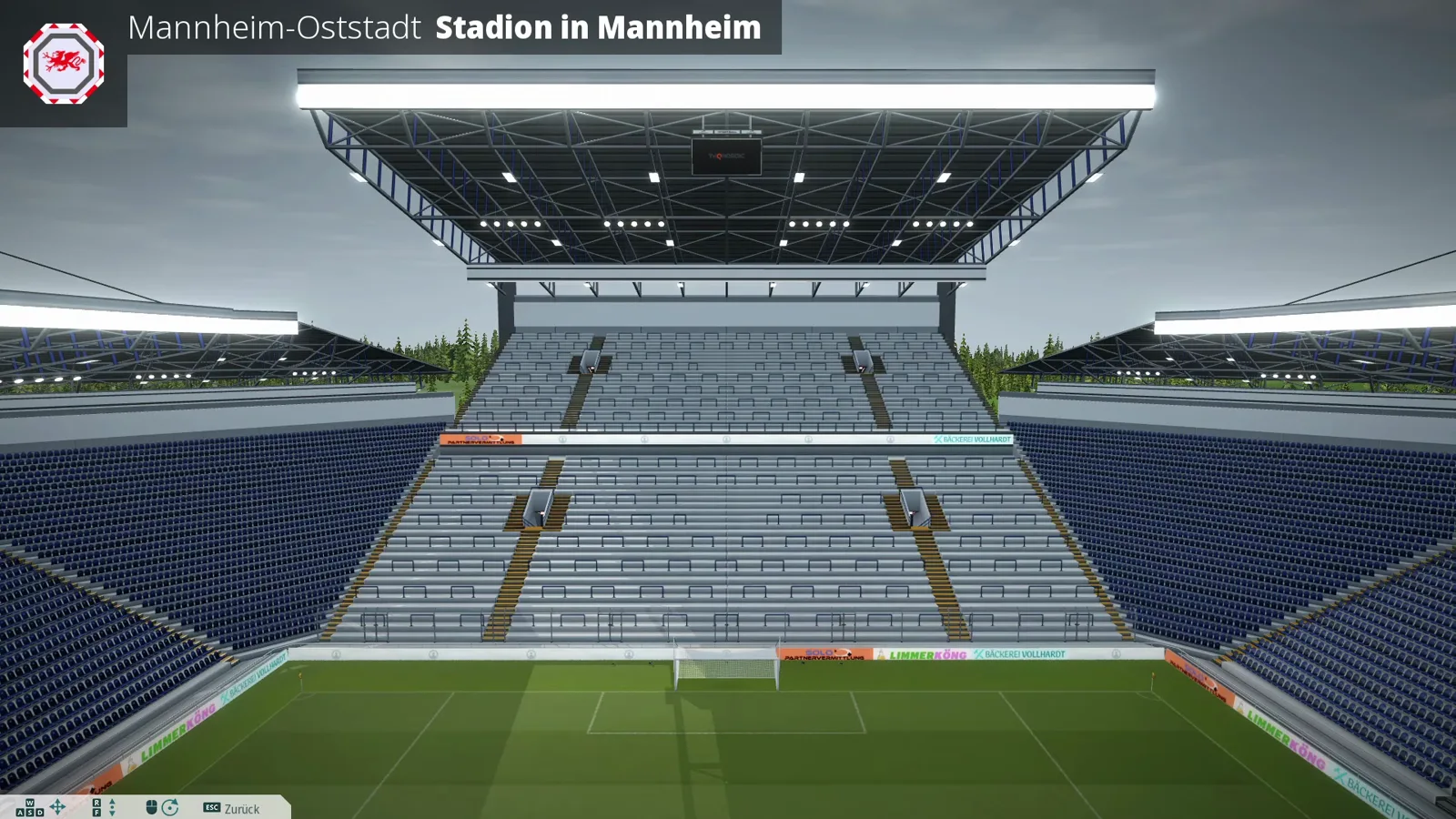
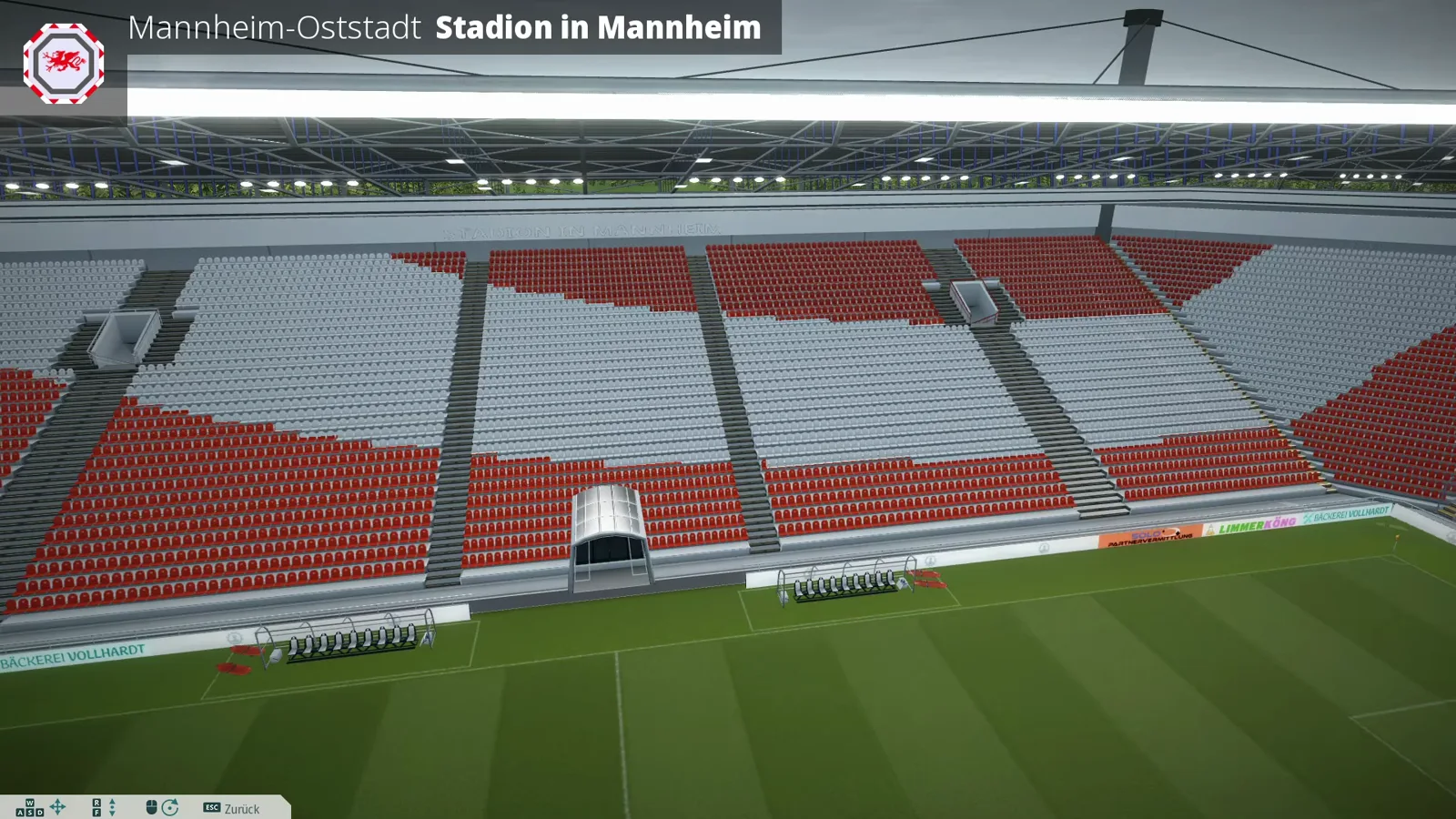
The finished product appears in the 3D view, where Ctrl plus number keys cycles weather and time from daylight to floodlit night.
Roofs, Scoreboard and Floodlights on the Details Tab
The Details tab bundles the cosmetic systems. Kosmetik offers roof types (the save uses a simple flat roof) and the toggle align roof uniformly to the highest stand, which fills leftover space with windows and walls so expansions share one roofline. Main and opposite stands take custom lettering, font size and a club logo.
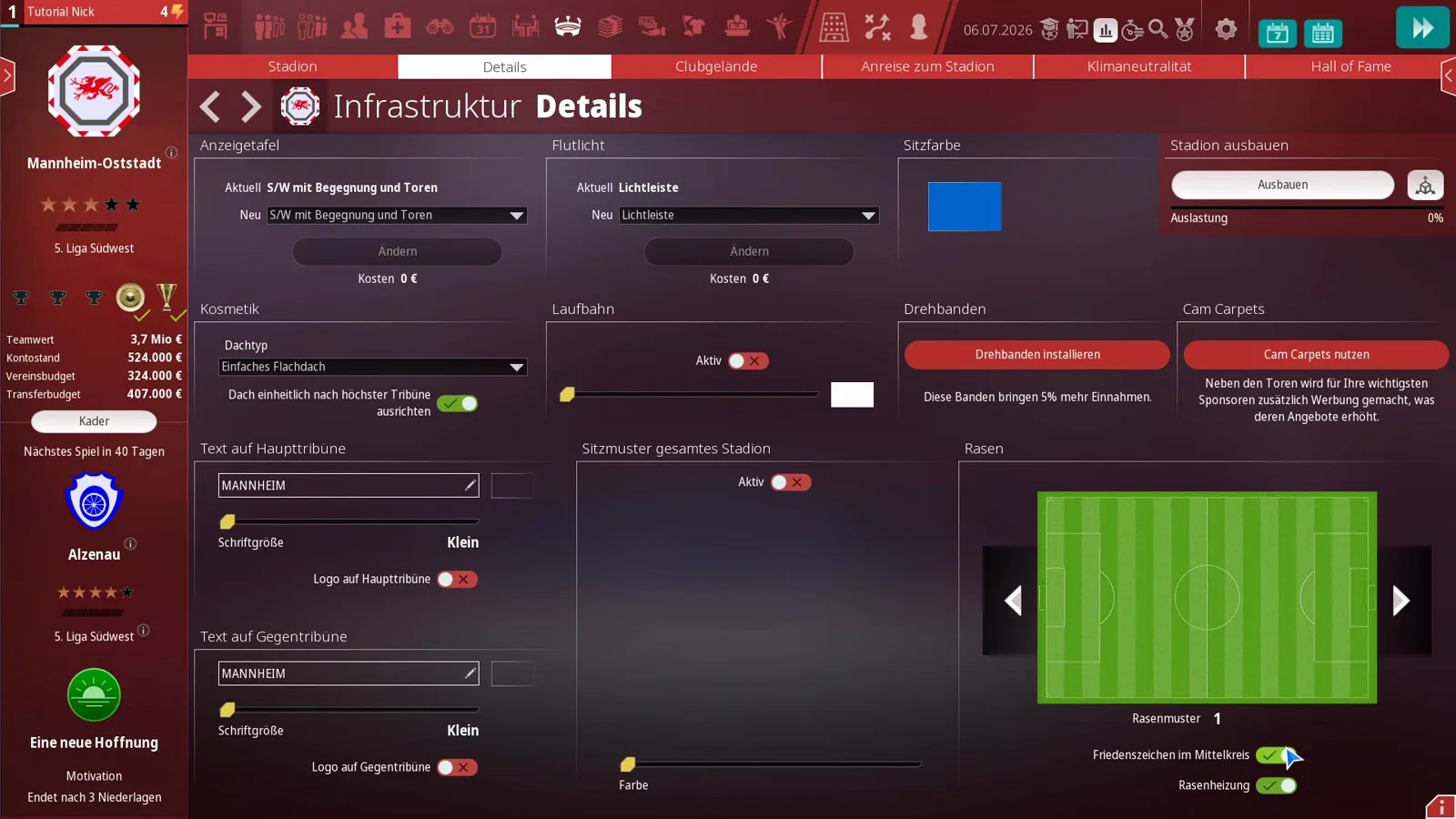
Anzeigetafel swaps the scoreboard — from a plain black-and-white result screen up to LED boards or a central video cube that the tutorial calls incredibly expensive. Flutlicht ranges from a roof light strip (the save’s choice) to free-standing masts that cost accordingly.
Running Track, Seat Colours and Lawn Care
The Laufbahn toggle wraps the pitch in a running track and recolors it, the seat colour swatch repaints every stand, and Sitzmuster paints stadium-wide patterns — in the tutorial Mannheim switches from blue to a red-and-white wave.
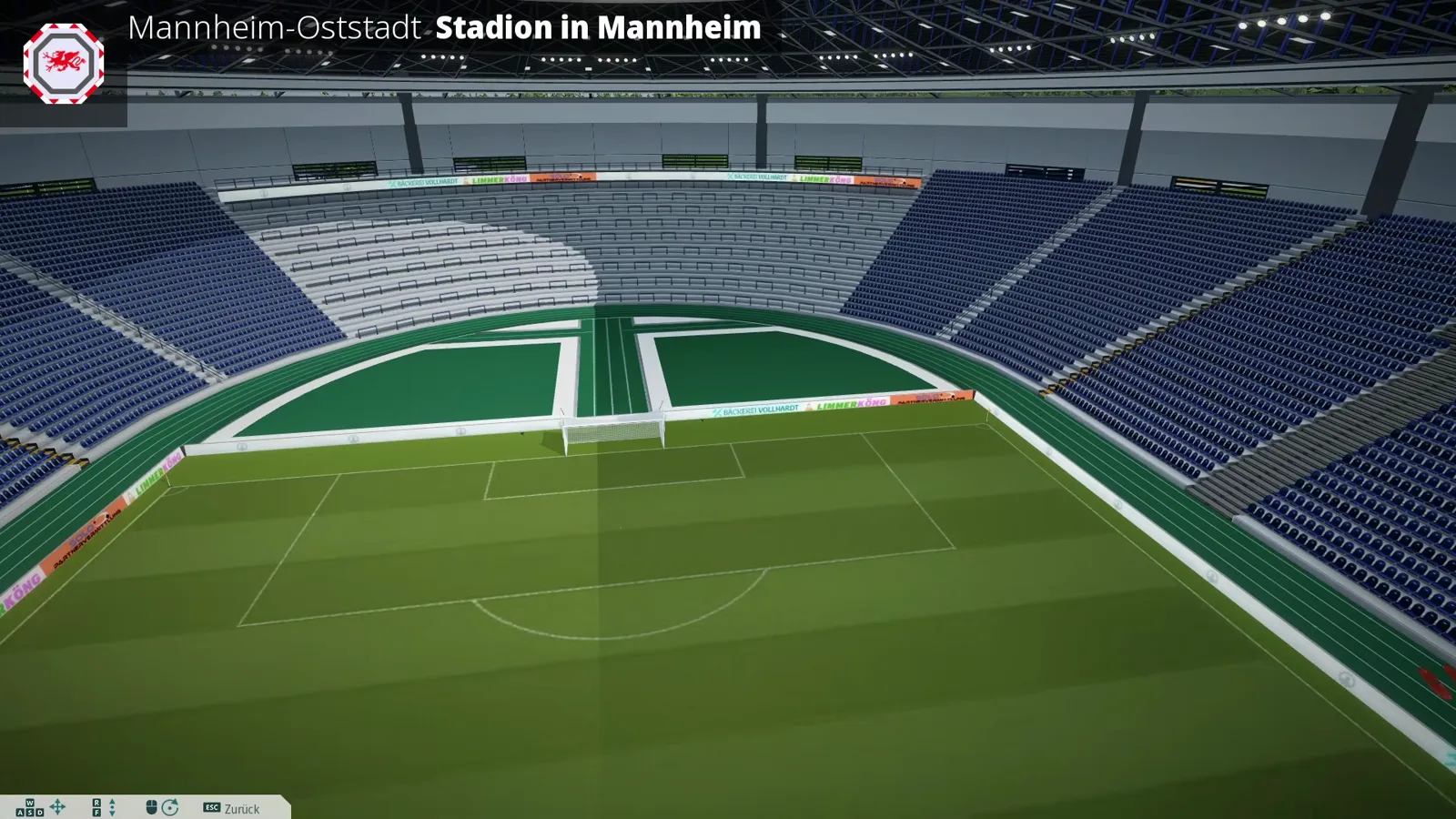
The Rasen panel cycles mowing patterns, drops a peace sign into the centre circle, and holds the brilliant Rasenheizung: it costs nothing, keeps the grass green through winter snow, and switching it off means playing on a white pitch. Patterns, colours and heated grass cost little but make every home matchday look distinctive.
Getting Fans Through the Gates
The Anreise tab measures how spectators reach the ground: ÖPNV (public transport), car and airplane, each with a percentage gauge and a Verbessern button — €20,000, €50,000 and €80,000 respectively in the tutorial save. Improvements lift club image, sponsor appeal and matchday experience, bringing more spectators.
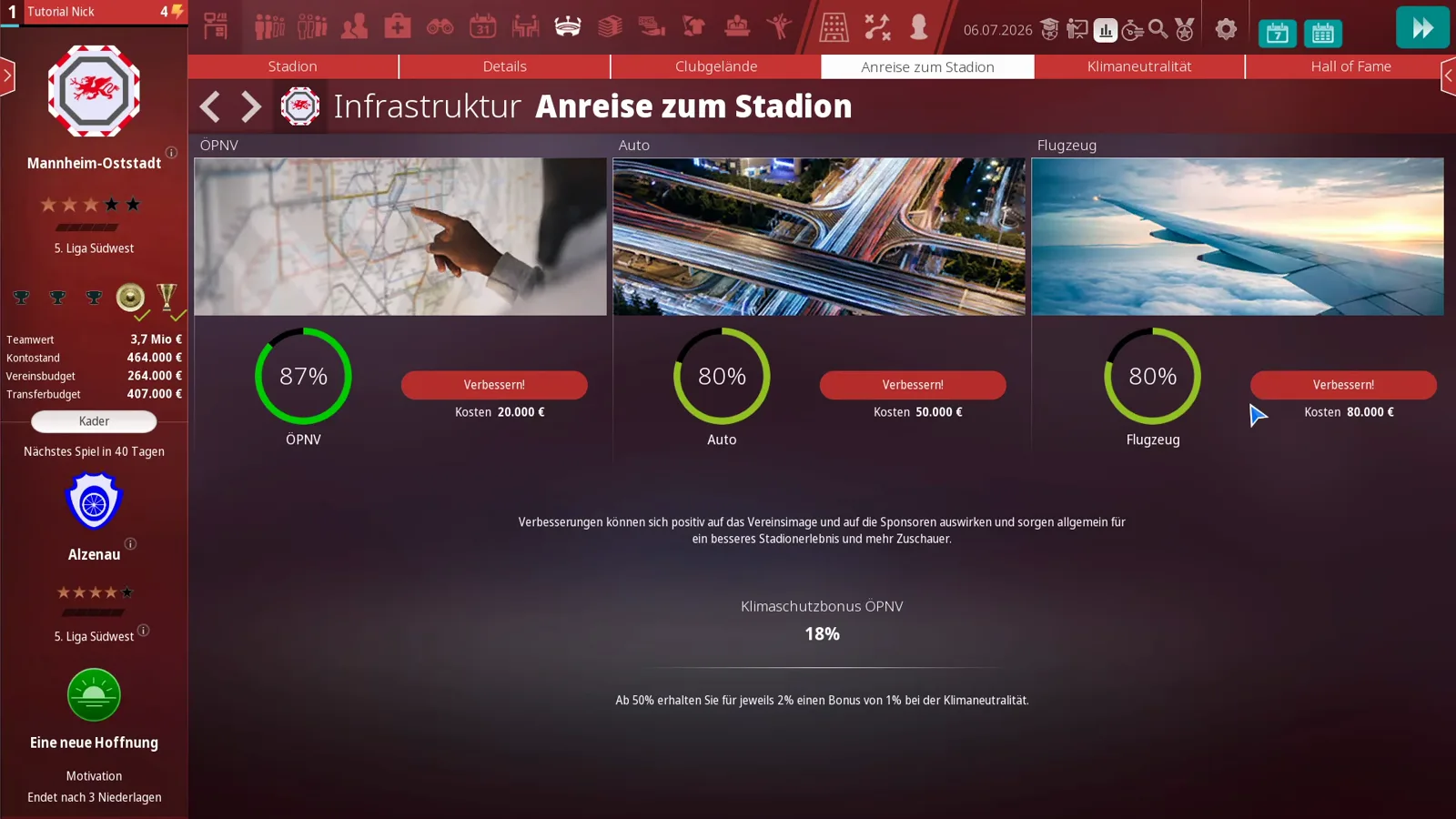
Each category also carries a climate protection bonus: from 50% upward, every extra 2% adds 1% to the Klimaneutralität tab, where certificates and club-ground projects close the remaining gap — some of them even generate revenue. Once the stands fill, reinvest the gate receipts using the season-one checklist in /guides/beginner-guide/.
Related Guides
guides
WE ARE FOOTBALL 2027: Beginner Guide & Tips
Essential beginner tips for WE ARE FOOTBALL 2027: Master pre-season schedules, coaching staff hierarchy, finances, training, and player contracts.
guides
WE ARE FOOTBALL 2027: Finances & Wage Budget Guide
Master WE ARE FOOTBALL 2027 finances: transfer and club budgets, reserves, wage control, sponsor types, TV money, ticket surcharges, loans, and taxes.
guides
WE ARE FOOTBALL 2027: Transfer Market & Scouting Guide
Master the WE ARE FOOTBALL 2027 transfer market: scouting network levels, player search filters, loan list rules, scouting assignments, and solidarity payments.
Was this helpful?
Thanks for the feedback!