WE ARE FOOTBALL 2027 Lineup Screen Guide: Formations, Bench & Set Pieces
How the lineup screen works in WE ARE FOOTBALL 2027: preset formations, the position grid, rule-based lineups, bench rules, character mix and set-piece takers.
Frequently Asked Questions
Where is the lineup screen in WE ARE FOOTBALL 2027?
What does the rule-based lineup (Regelbasierte Aufstellung) do in WE ARE FOOTBALL 2027?
How do I set penalty and set-piece takers in WE ARE FOOTBALL 2027?
Why does the team strength number change when I switch formations?
Tactics sliders decide how your team wants to play — the lineup screen decides who actually walks out and where. This is the screen you touch before literally every fixture, and the tutorial dedicates half an hour to it: preset formations, free dragging on the pitch, an opponent comparison, extra list columns, character types, the new rule-based lineup and the task dialog for penalties and captains. If you are still choosing which system to play at all, our best tactics and formations guide covers that side first; this page stays on operations.
Where is the lineup screen in WE ARE FOOTBALL 2027?
The tutorial picks the screen up already open, and its header labels it 1. Mannschaft Aufstellung — first-team lineup. The layout never changes for the whole video: the pitch sits on the left with every selected player as a draggable card carrying his current rating, the squad list fills the right side, the opponent comparison sits above it, and a bar of action buttons runs along the bottom. The same screen exists for the second team — the tutorial says outright that it works identically there, it simply lacks the squad to demo it.
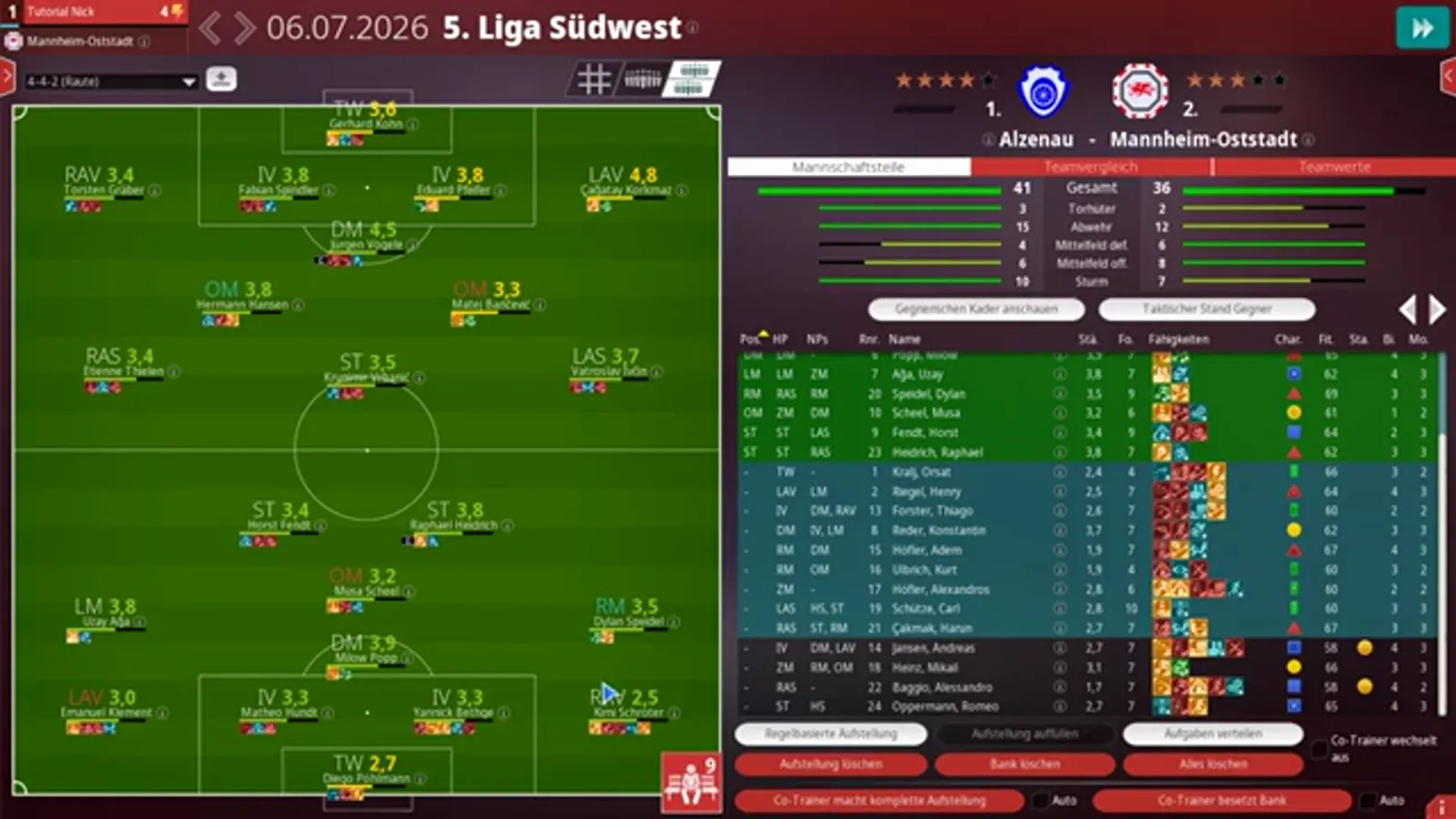
The bottom bar is the screen’s toolbox: Aufstellung auffüllen and Bank löschen for quick fill-and-clear jobs, Alles löschen for a blank slate, and the two delegation buttons Co-Trainer macht komplette Aufstellung and Co-Trainer besetzt Bank — one click each, and the assistant picks the eleven and the bench for you. The tutorial warns this blind trust can backfire: the assistant optimizes ratings, not your tactical plan, and happily hands you three centre-backs if that scores best on paper.
How do preset formations work?
The dropdown above the pitch lists every basic shape the game ships with — the tutorial scrolls a list that runs from 5-1-2 (Line) and 5-3-2 (Diamant) through 5-4-1, 4-4-2 line, 4-4-2 (Raute), 4-1-4-1 and 4-1-2-1-2, with 3-5-2 further down the menu. The author is blunt about his own bias: he has run the 4-4-2 diamond since his first Football Manager days, and only reaches for five-at-the-back shapes in a relegation fight.
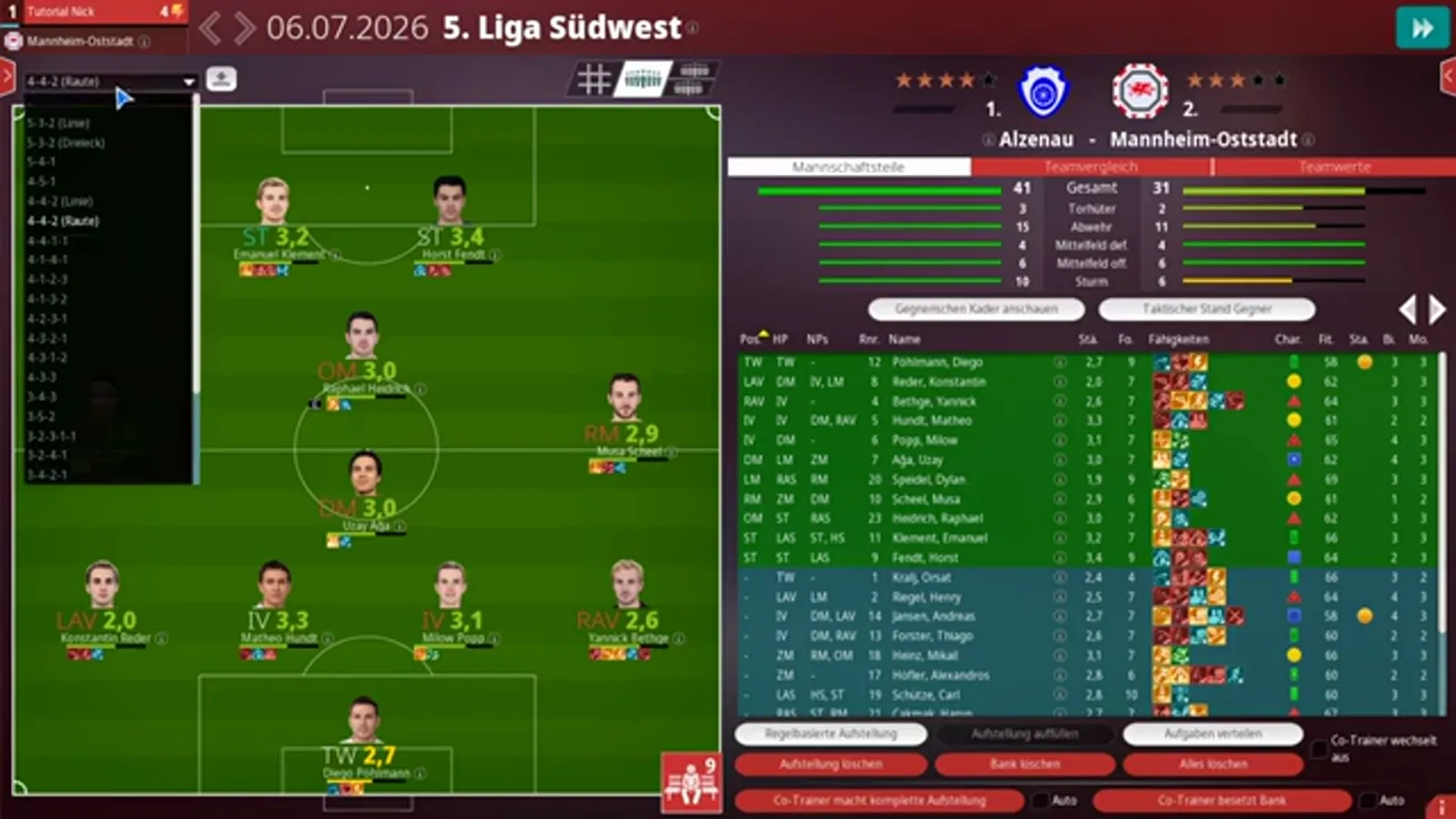
Switching a preset does not just redraw tokens — it reshuffles every player into a new spot, and the ratings on the pitch jump with it. That is the whole trade-off of the screen: a formation is only as strong as the players who fit its positions, which is exactly what the comparison panel in the next section measures.
What does the position grid do?
Tick the grid display and the pitch shows its position zones as labelled areas — LAS, ST, RAS, HS, OM, LM, ZM, RM, DM, LAV, IV, RAV. Drag any player anywhere. The rule the tutorial demonstrates: when the centre point of a dragged card crosses a zone border, the position switches. Keep him on the border and you farm the sweet spot — the tutorial’s winger Milow Poppi sits between LM and LAS at a rating of 1.8, while a pure move would cost him: roughly a 1 as a pure LAS versus a 3 as a pure LM.
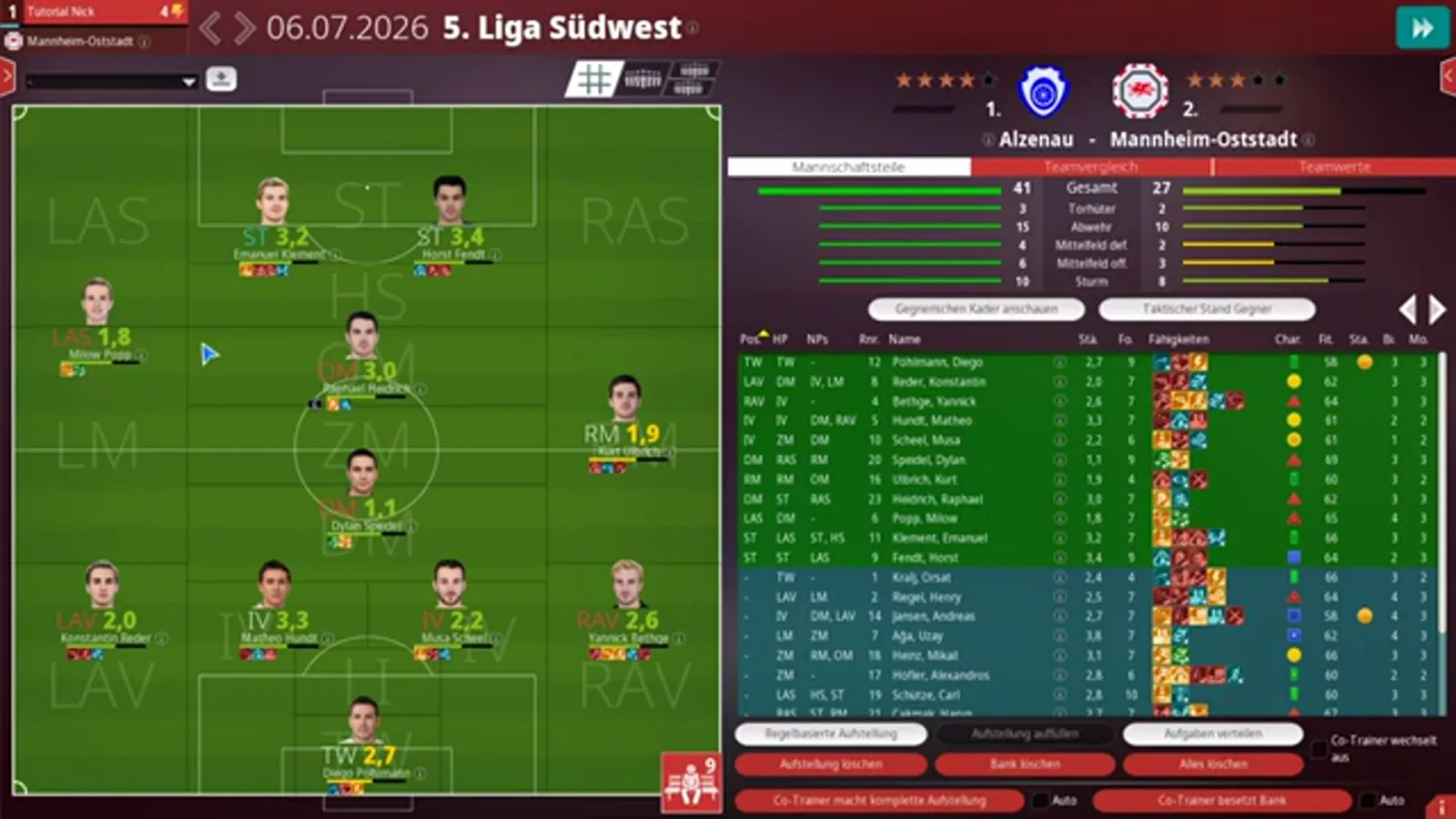
The zones also expose niche spots — the tutorial points at the libero zone, which only exists in that one place on the pitch, for coaches who still want a liberos line. Position shapes have real consequences: pull a winger inward and the opponent’s full-back suddenly has no marker. Which shapes punish which opponents is covered in the match engine tactics guide.
How do you read the opponent comparison?
Above the list sit three tabs — Mannschaftsstärke, Teamvergleich and Teamwerte. The strength tab compares the units row by row: Gesamtstärke, Torhüter, Abwehr, Mittelfeld (def), Mittelfeld (off) and Sturm, with buttons to open the opponent’s squad (Gegnerischen Kader anschauen) or his tactical setup (Taktischer Stand Gegner).
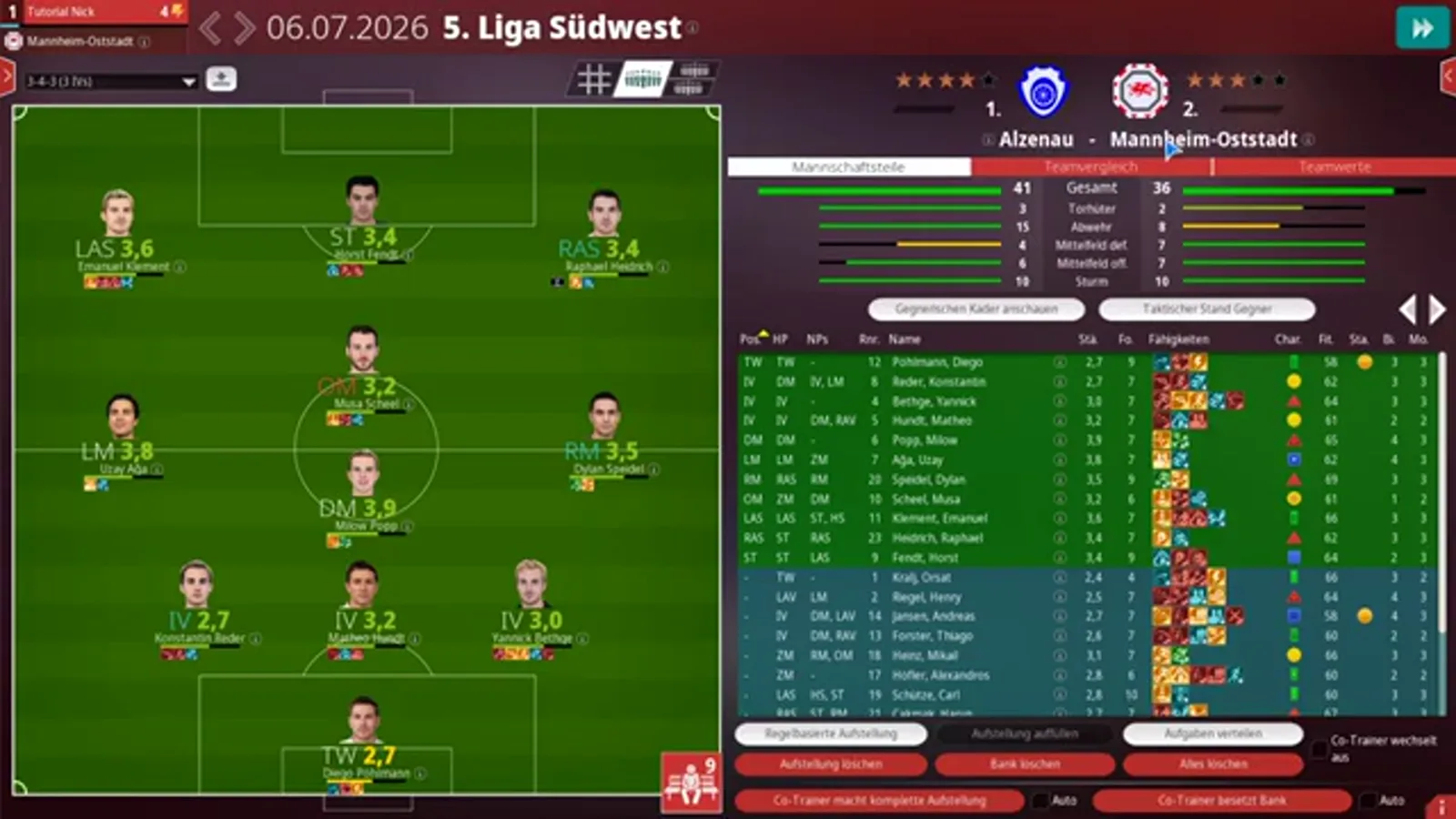
Read the columns correctly: the left side belongs to the opponent, the right side to you — and your side moves. Alzenau’s 41 never budges, while the tutorial club swings between 27 and 36 as formations change, because every misplaced player drags his unit down. The tutorial’s arithmetic: Alzenau’s defence rates 15 against the tutorial’s 8, so a 10-rated strike force would run into that wall all afternoon — his answer was a rule-based switch that lifted the defence rating to 12 while keeping the base formation. The Teamwerte tab adds squad-level context the author glances at: average strength, age, form and fitness, plus experience, motivation and a Künstler-Index, with a satisfaction bonus (a +1.7 bump in the shot) applied on top of team strength.
Which extra player columns are worth a scroll?
The arrows beside the list scroll through columns beyond the basics: age, character, satisfaction smileys, footedness, nationality — plus talent markers, appearances and playing time. The tutorial treats these as decision inputs, not decoration: he swaps his two strikers’ flanks so each shoots with his stronger foot, checks the talent star before giving a youngster minutes, and balances squad-wide playing time promises so the reserve keeper hits his target share too.
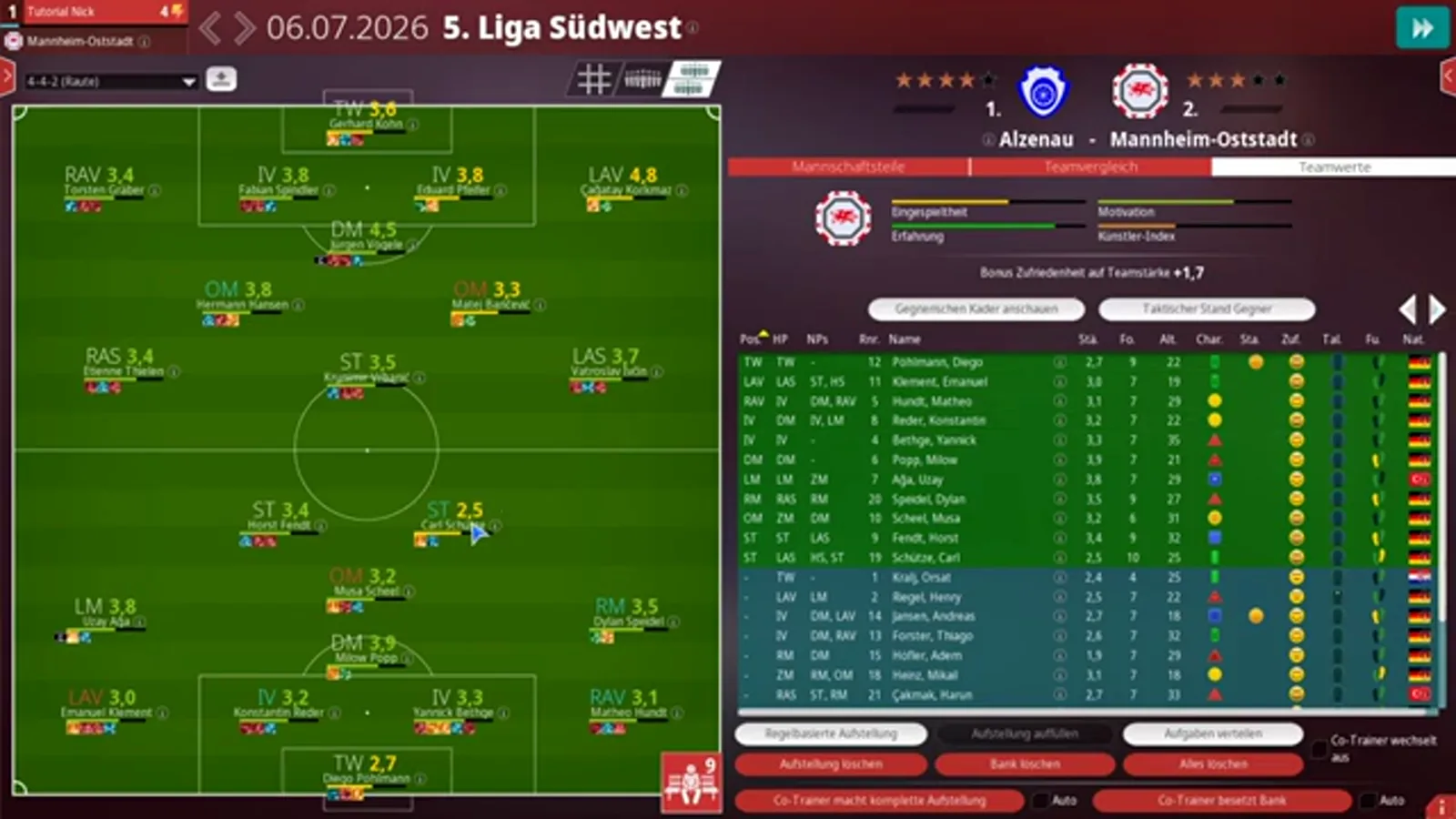
One warning from the same segment: a player sitting in the stands who sees weaker names on the pitch gets angry — especially if you promised good form would play. The satisfaction side of that loop is covered in the morale and satisfaction guide.
Why does the character mix matter?
The author’s rule of thumb — his experience, not a game tooltip: keep at least two players of every character colour on the pitch. All creatives play wonderful football into nobody’s run; all leaders argue over who runs; all analysts analyze instead of playing; all team players pass beautifully and never shoot. A mix lets the chain work — creative pass, leader’s decision, analyst’s read, finish. In lower leagues he accepts one per colour, and his worst-case squad ran seven leaders plus three team players: it struggled, but raw playing strength still saved results. Where those character types come from and how they form is its own topic; the skills side he reserves for a later video, summing it up as: skills barely move the strength number, but on the pitch a keeper’s catching or reflexes decide single shots.
How does the rule-based lineup work?
The new feature the tutorial is genuinely excited about: instead of only weighting form, the Regelbasierte Aufstellung dialog now lets you weigh up to four criteria, weighted 100 percent, 75 percent and so on. His setup: Priorität 1 – Hauptposition, Priorität 2 – Stärke, effect set to Wirklich beachtlich. His example: two right-backs available, one natural, one a right-winger who can cover — the rule picks the natural one.
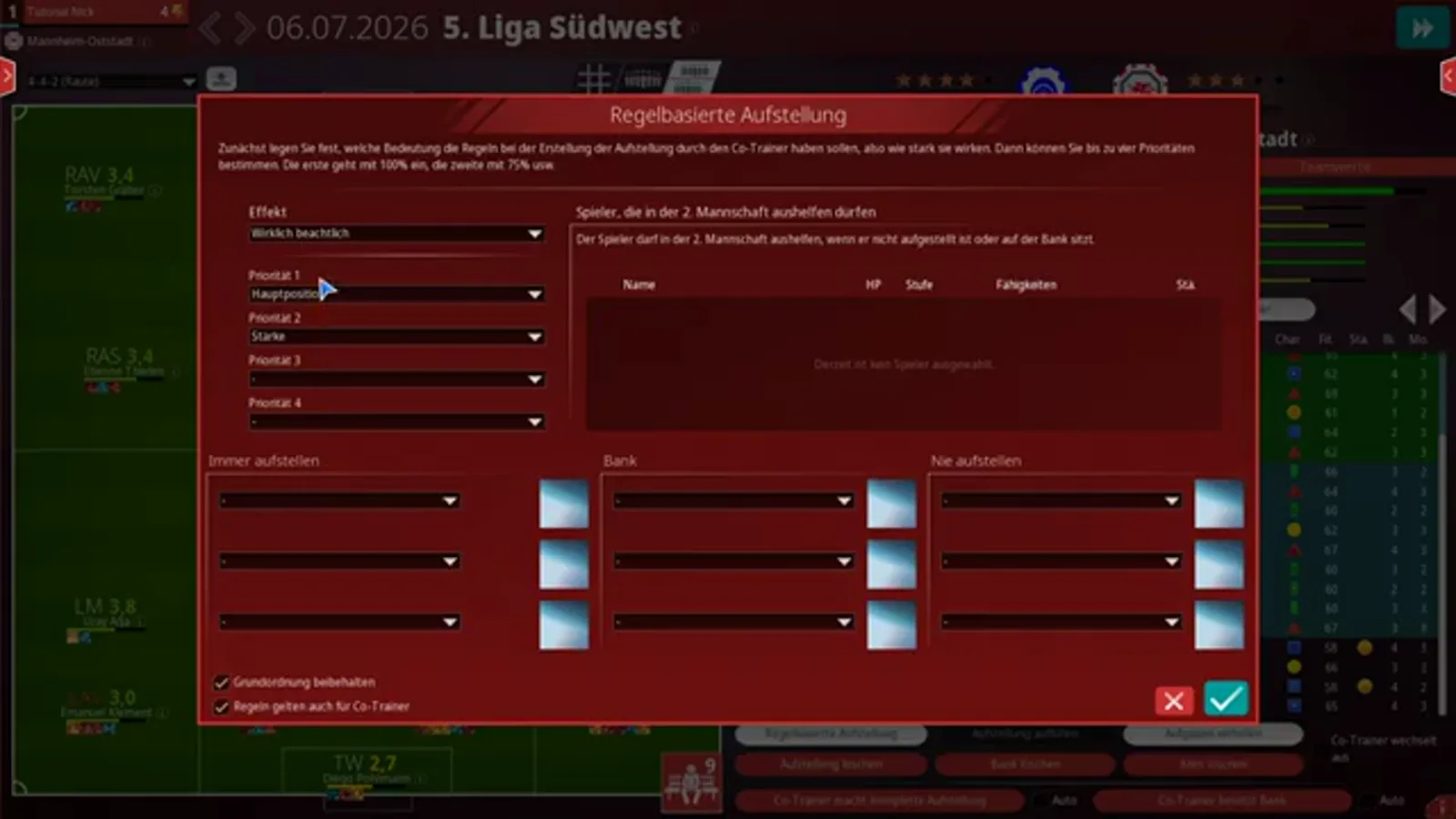
Two checkboxes frame the whole dialog: Grundordnung beibehalten keeps your chosen formation untouched, and Regeln gelten auch für Co-Trainer extends the rules to every assistant-generated lineup. That is the point of the feature — you program the policy once, then the bottom-bar delegation buttons produce lineups you no longer have to micromanage.
Can you pin players or free them for the second team?
The dialog’s lower half holds three slot groups: Immer aufstellen, Bank and Nie aufstellen, three players each. The tutorial forces his keeper to always start, plants a winger on the bench — and a bench player cannot simultaneously help the second team, as the shot shows: Alessandro Baggo is pinned to the Bank slot while also cleared for the reserve side.
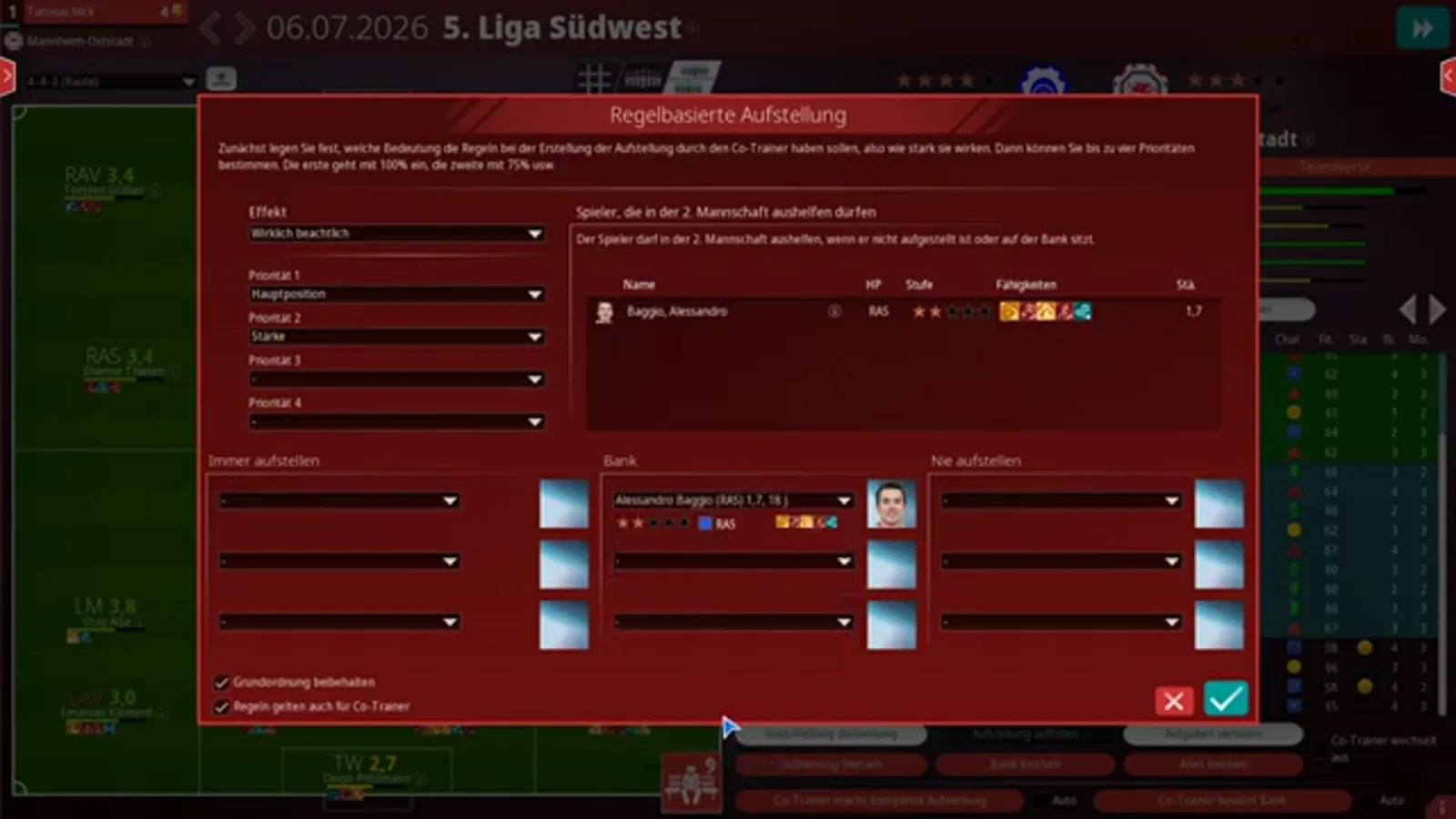
The clearing rule reads: a player may turn out for the second team when he is neither in the starting eleven nor on the bench. Marking a player Nie aufstellen therefore makes him permanently available for the reserve side — and the same toggle exists on each player’s profile page.
Where do penalty takers, captain and emergency keepers get set?
One dialog handles all of it: Aufgaben verteilen. The left table lists every duty — Elfmeter, Ecken rechts, Ecken links, Freistöße plus both flanks, Kapitän, Abwehrchef and Torhüter im Notfall — each with a responsible player and a Stellvertreter (deputy). The right list ranks the takers; green rows are on the pitch, white rows are not, so a striker ordered first is useless if he has been subbed. The caption spells out the mechanic: drag entries with the left mouse button.
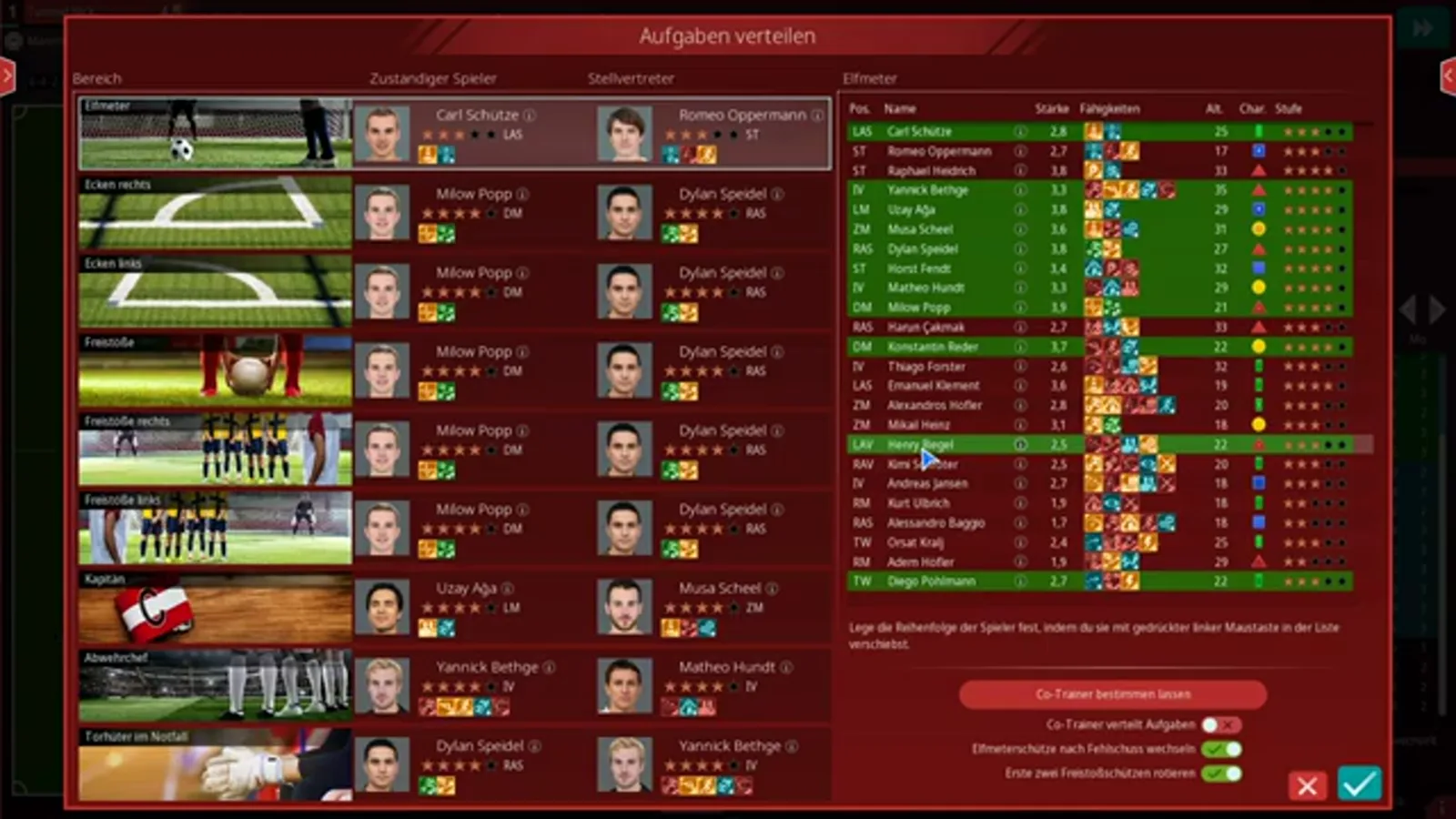
Three toggles automate the chores: Co-Trainer verteilt Aufgaben, swap the penalty taker after a miss (Elfmeterschütze nach Fehlschuss wechseln) and rotate the first two free-kick takers. The author lets the assistant decide most roles and jokes he would sooner make the co-trainer captain — but his tips are concrete: the captain should carry self-confidence and negotiating traits and lead by type (his shot, Raphael Heidrich, is a level-one Anführer and Mannschaftskapitän), and a leaking defence sometimes just needs an older Abwehrchef barking the line into shape.
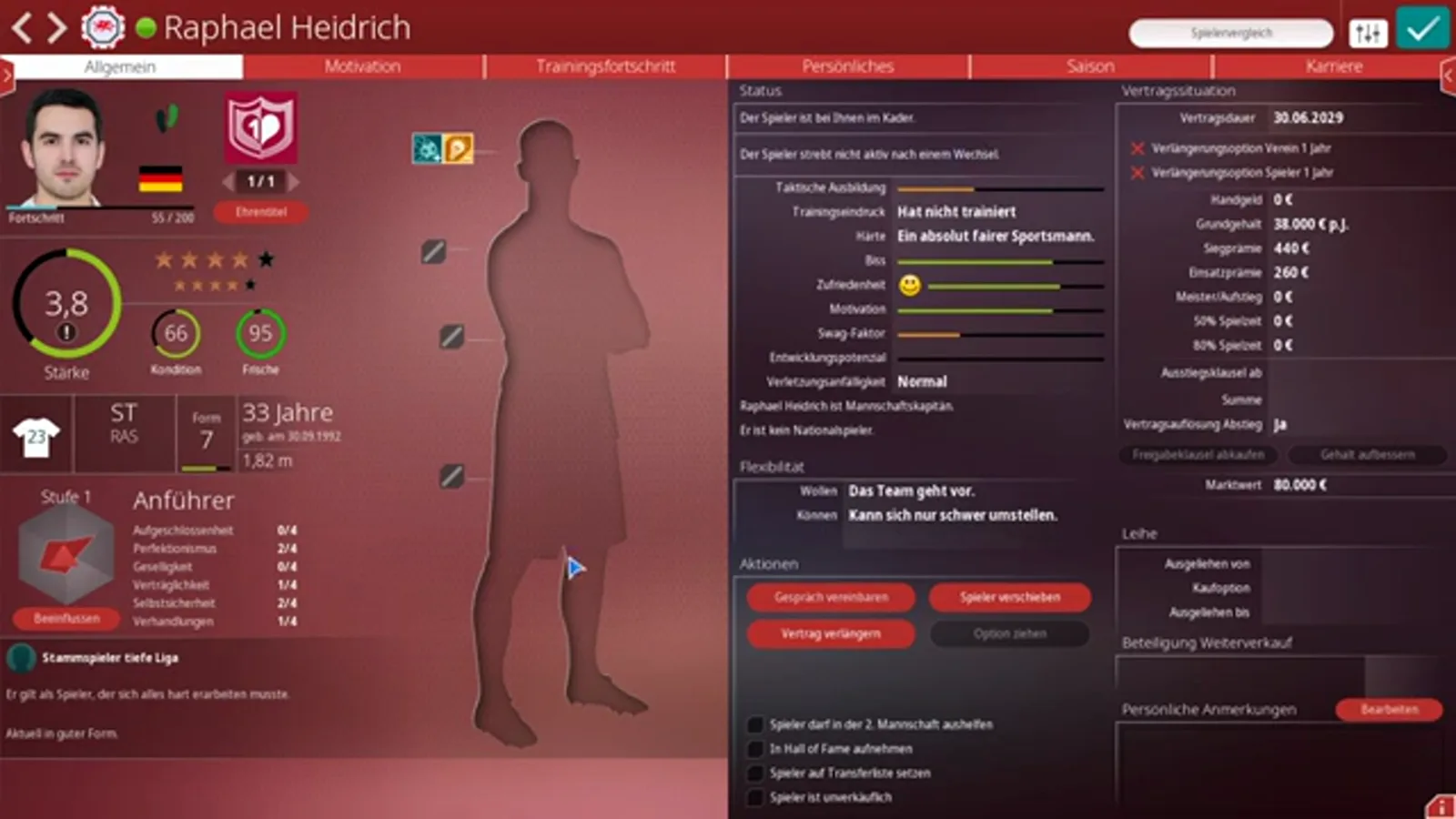
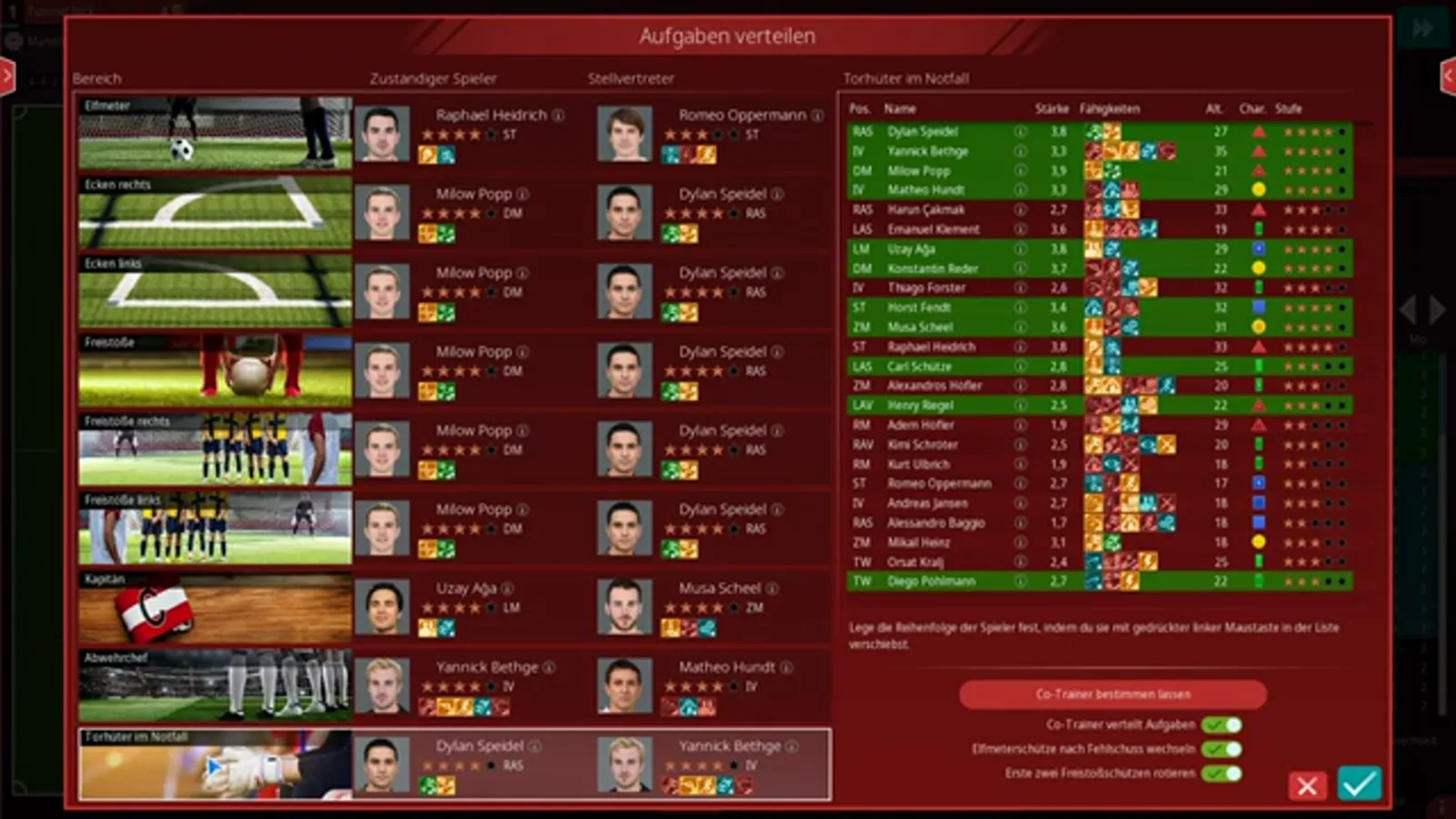
The Torhüter im Notfall rows are pure insurance: outfield players who inherit the gloves when your keeper is sent off or injured and the substitutions are spent — the author recalls the real-life Dortmund case of Großkreutz going in goal.
From lineup screen to transfer market
The tutorial closes with the bigger picture: this screen is where squad analysis starts. Read your weak rows here, cross-check the opponent, and the shopping list for the transfer market writes itself — the video’s own club sat at 36 against Alzenau’s 41, and that gap is exactly what the next transfers are for. The keyboard and mouse shortcuts for all this dragging live in the controls guide, the weekly rhythm around match days in the weekly schedule guide. What the video does not cover: in-match substitutions and touchline commands — that is the match engine guide’s territory, and the formation meta debate stays in the best tactics and formations guide.
Related Guides
guides
WE ARE FOOTBALL 2027 Action Points Guide: How to Earn and Spend Them
Action points in WE ARE FOOTBALL 2027: the manual's earn table, the 50-point cap, every documented way to spend them — and why you cannot buy them.
guides
WE ARE FOOTBALL 2027 Options Guide: Every In-Game Setting Explained
Every in-game option in WE ARE FOOTBALL 2027: change difficulty mid-save, split budgets, autosave weekly, slow the week down, Hotseat timers, search caps, sackings.
guides
WE ARE FOOTBALL 2027 National Teams: Start, Season and Women's Football
National teams in WE ARE FOOTBALL 2027: no DLC needed. How to start or become a national coach, how qualifiers work, and what women's football offers.
Was this helpful?
Thanks for the feedback!