WE ARE FOOTBALL 2027: Contract Negotiations & Player Contracts
Master contract negotiations in WE ARE FOOTBALL 2027: release clauses, appearance bonuses, loyalty payouts, signing fees, and salary amendments.
Foire aux questions (FAQ)
Can I renegotiate a contract without opening a full extension talk?
What happens when a player has no release clause?
How do loyalty bonuses work in WE ARE FOOTBALL 2027?
Can I buy a release clause back from my player in WE ARE FOOTBALL 2027?
Opening Contract Talks From the Player File
WE ARE FOOTBALL 2027 lets you initiate negotiations straight from any player profile, without routing through the squad list first. Select a player, open the actions panel, and choose Extend Contract, Arrange Meeting, or Transfer Player depending on your goal.
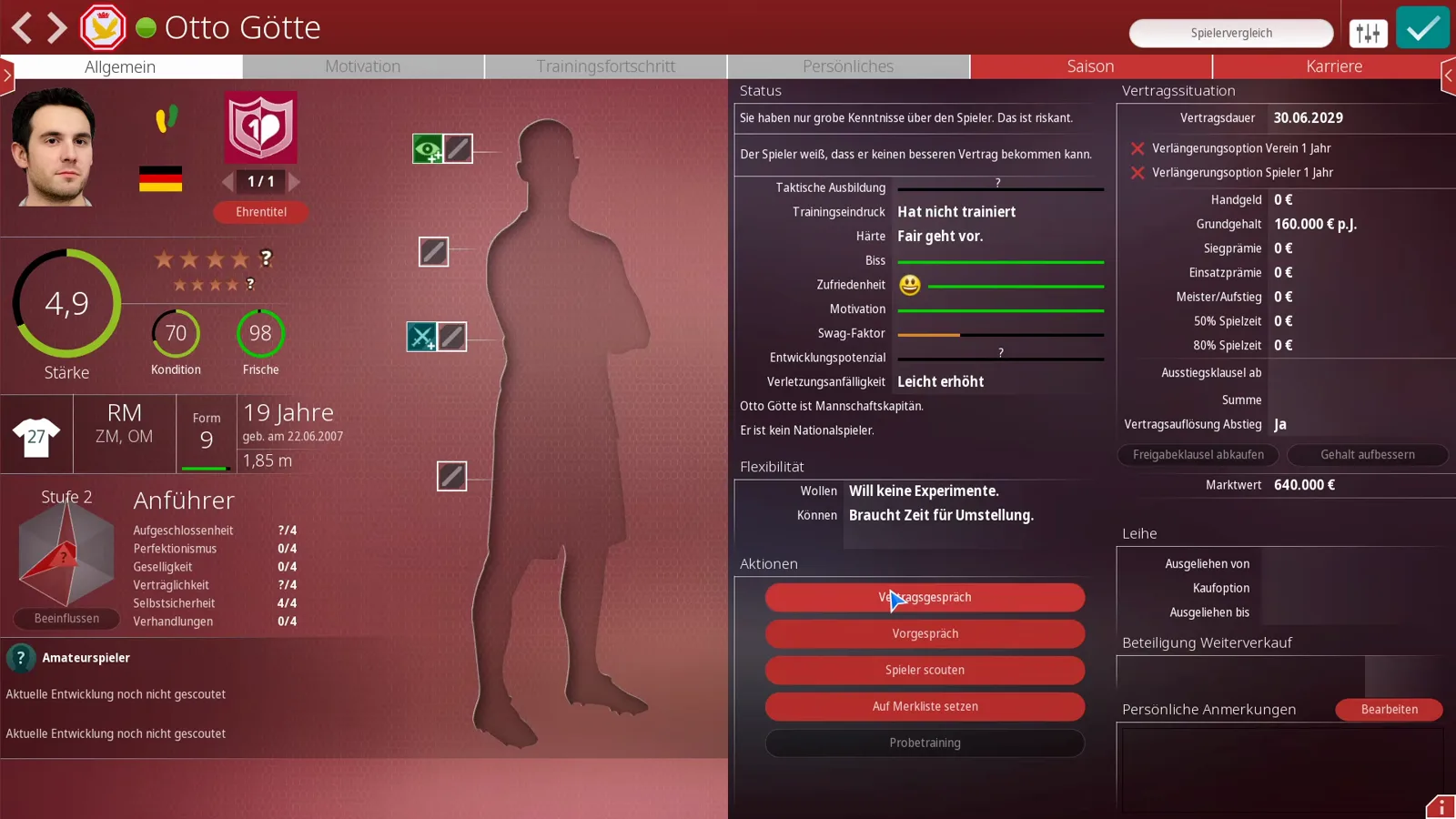
This workflow replaced the older menu flow where contract buttons stayed greyed out until you navigated back to the club squad screen. For busy transfer windows, the shortcut alone saves several clicks per target.
Before committing wage budget, review the player file indicators that shape talks: satisfaction (yellow means something is wrong), motivation, and team-player qualities such as negotiations rating for leaders. Pair contract planning with the staff setup in our beginner guide so you enter talks with accurate market-value context.
Reading the Contract Screen: Clauses and Bonuses
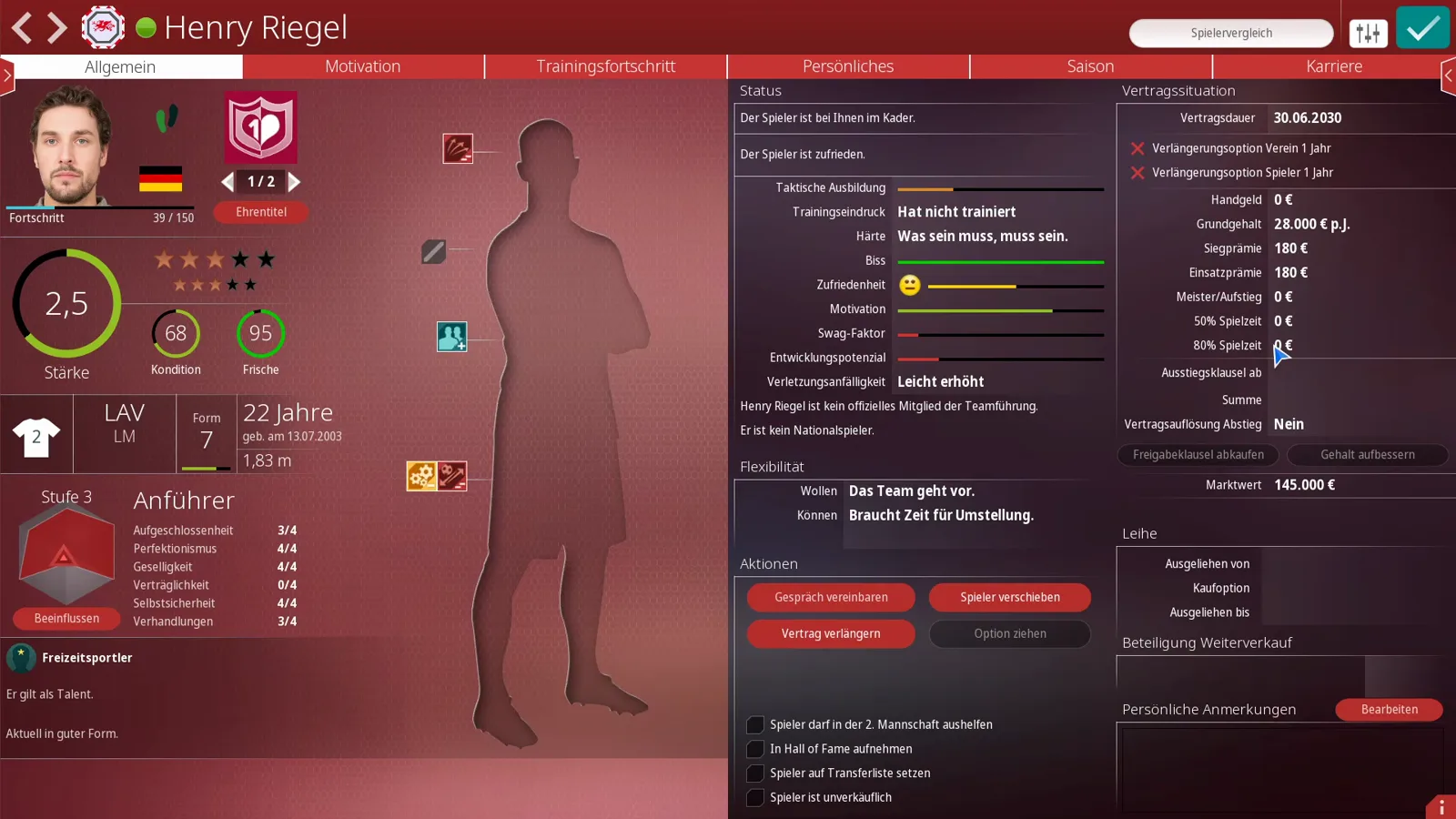
The contract tab breaks every financial obligation into visible line items. A typical deal shows annual base salary, per-match win bonus, appearance bonus, promotion bonus, loyalty thresholds, and optional release-clause value.
Release clause (buy-out fee)
If a release clause is set, rival clubs can trigger it for the listed sum and bypass lengthy bidding. When the field reads zero, no automatic buy-out exists — you control every sale. For wonderkids you plan to develop, see our best wonderkids guide before attaching low clauses that invite poaching.
Win bonus and appearance bonus
Both bonuses are typically quoted per competitive match. In the tutorial example, a €180 win bonus and €180 appearance bonus sit on top of a €28,000 annual base wage. Stack these carefully on squad players with guaranteed minutes; rotation members may never trigger win bonuses but still collect appearance fees.
Loyalty bonuses at 50% and 80%
Separate loyalty lines reward players who hit 50% and 80% of available playing time across the season. Empty fields mean no extra payout — acceptable for fringe players, but first-team regulars often expect at least one tier filled. Missing loyalty pay is a common reason satisfaction turns yellow mid-season, and the satisfaction meter is only half of the Motivation bar — the other half, Biss, is broken down in our morale and satisfaction guide.
Signing bonus
The signing bonus field can stay at zero for internal renewals. Offer a lump sum when persuading external targets or unhappy stars during extension talks. A modest signing fee often costs less over three years than raising base salary permanently.
Release Clauses: Triggering, Avoiding and Buying Back
The release clause is the one contract item that binds the seller, not the buyer. The official manual linked from the Steam store page is blunt about who profits: “If a fixed transfer fee has been agreed, this is only beneficial to the player and the interested club.” From the year the clause takes effect, the selling club may demand at most that fee — and once a buyer offers it, talks with the player go ahead “even if he has a much higher market value”. The manual’s own advice to sellers: avoid agreeing a clause whenever the player still has development potential (EN p. 104 / DE S. 104).
New in 2027, you can buy the clause back from your own player, provided he is not completely dissatisfied (EN p. 84 / DE S. 106-107). The demanded share of market value grows with every risk factor: 2% per talent level, 1% per year of age under 26, 3% per contract year beyond the first, 3% per happiness level below the best, plus 1% for every 5% the market value exceeds the clause (or minus 0.6% per 5% below it). Minimum demands depend on the clause-to-value ratio: at least 10% of market value when the market value exceeds the clause, 6% when it still exceeds 80% of the clause, 3% above 50%, and 1% in all other cases. Our finances and wage budget guide explains where that lump sum comes from.
Your own negotiation skill feeds in as well: per the manual, the Negotiations skill raises the offered exit clause by one level per skill level, alongside its 5% per level boost to round acceptance (EN p. 75 / DE S. 79-80) — well-trained negotiators sign players on smaller clauses. On the buying side, the data analyst unlocks a “has a release clause” search filter at level 7, the cheapest shortcut to bargain targets; the workflow lives in our transfer market guide.
How strictly the game enforces a live clause is still being worked out by players. In the Steam thread “Ausstiegsklausel” (opened 28 September 2026, three replies, in German), the original poster describes a negotiation that left him a single option — trigger the clause, no fee talk, no cancel button — with a budget too small to pay it, forcing him out of the game entirely. The first reply calls that consistent: he could negotiate with the player at all only because the clause exists, and the selling club will not let him go below its value. A later reply reports that the transfer fee has sometimes been negotiable anyway, suspecting the ratio of market value to clause size as the deciding factor. These are player reports, not documented rules — the manual’s clause entries say nothing about when a fee stays negotiable around a live clause.
Salary Amendments and Loan Purchase Options
When satisfaction drops because of wages — not role or minutes — use contract amendment tools instead of tearing up the entire agreement.
Quick salary fix
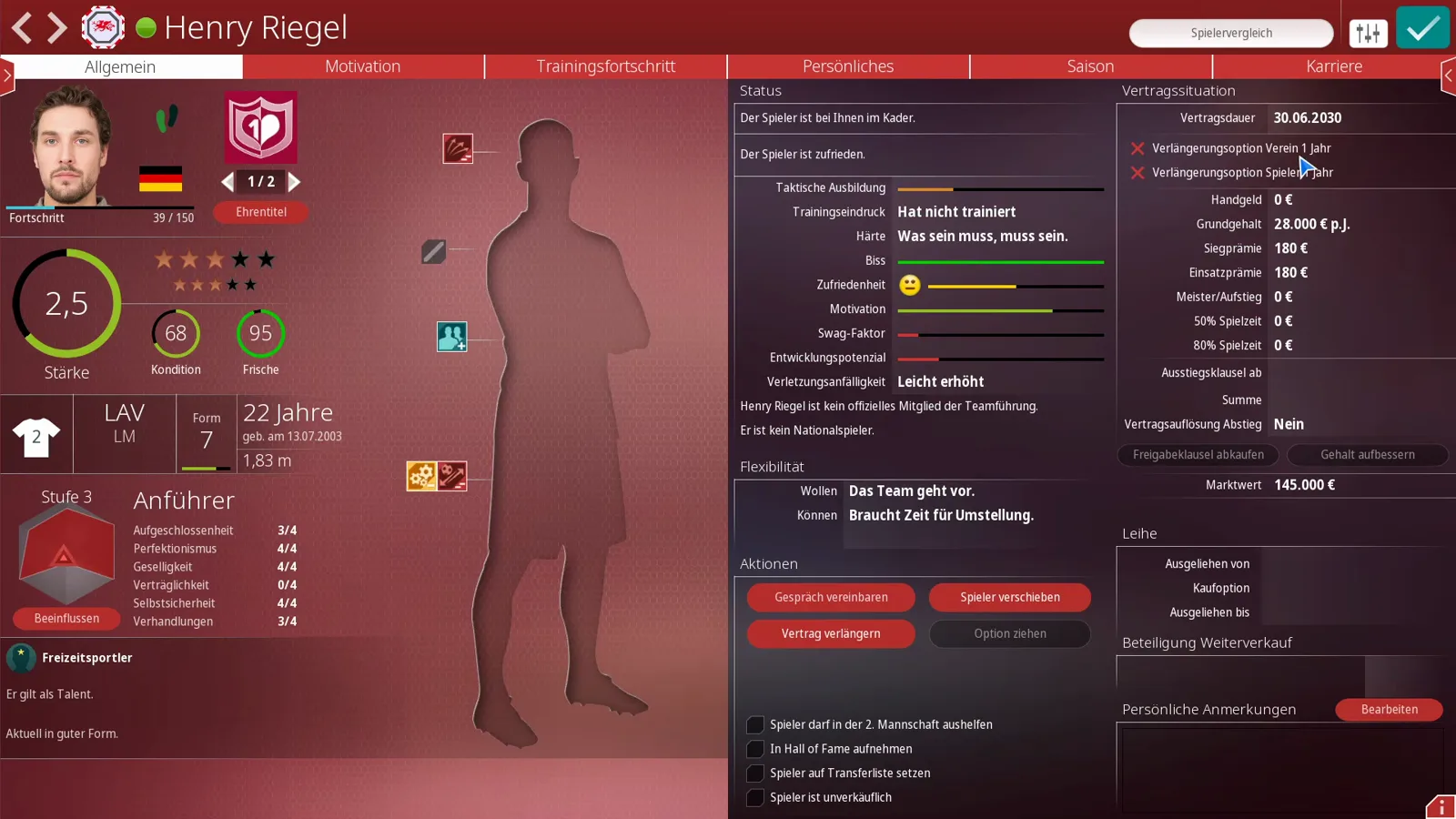
The amendment panel lets you adjust salary without renegotiating duration, bonuses, or clauses. Use this when a key player complains about pay but you want to keep the existing structure intact.
Loan-to-buy workflow
Loaned players display the originating club, end date, and purchase option price. Pulling the option converts the loan into a permanent transfer; only then can you edit release clauses, loyalty tiers, and long-term wages freely.
Sell-on clause tracking
If you bought a player whose former club holds a sell-on percentage, the contract screen shows the exact share due on any future resale. Factor that into your asking price before listing someone on the transfer market. Our transfer market guide covers the selling-side workflow, from search filters to the transfer balance screen that price feeds into.
Managing Negotiation Patience and Player Mood
WE ARE FOOTBALL 2027 does not hide contract frustration — dissatisfied players show yellow satisfaction bars long before they request a move.
- Visit before you lowball: Use Arrange Meeting under Private & Office when satisfaction slips; praise recent training if the data supports it.
- Amend, then extend: Try a salary amendment first. Full extension talks after a rejected opening offer burn goodwill faster.
- Watch age and decline: Players over 30 begin losing level progress; offering long loyalty-heavy deals to declining profiles often triggers repeated renegotiation requests.
- Use personal notes: The contract note field stores reminders like “never sell” or “development project — review at 21” so future-you avoids panic sales during patience-testing transfer windows.
For squad players who need minutes guarantees written into deals, align contract promises with the rotation plan in our best tactics and formations guide.
Guides recommandés
guides
WE ARE FOOTBALL 2027 Team Strength Comparison: Stars, Gauges, Scouting Lists
How to read team strength in WE ARE FOOTBALL 2027: Kader stars, the profile gauge, the pre-match Mannschaftsteile bars and the scouting list for the next fixture.
guides
WE ARE FOOTBALL 2027 Season Planning Guide: Budget Split, Kits and Squad Numbers
The Saisonplanung stretch in WE ARE FOOTBALL 2027 screen by screen: promotion payout, league target, budget split, new kits, club rules and squad numbers.
guides
WE ARE FOOTBALL 2027 Relegation Battle Guide: Escaping the Red Rows
A relegation battle in WE ARE FOOTBALL 2027 screen by screen: the red Verbandsliga table rows, a 0:1 away steal, a 1:4 home defeat and the January deals in between.
Ce guide vous a-t-il été utile ?
Merci pour votre retour !